
Key Takeaways
- A dead tree can fail without warning, even on a calm day, making it one of the more unpredictable hazards on a residential property.
- Leaving a dead tree standing on your Columbus property can create serious safety risks, including sudden tree failure, falling limbs, property damage, and costly liability concerns.
- Dead trees near homes, driveways, and power lines carry outsized risk because of what’s underneath them when they fall.
- Insurance companies frequently deny storm-damage claims tied to trees that were already dead or visibly hazardous beforehand.
- Prompt removal by an insured, experienced crew is almost always cheaper than the cost of a dead tree failure.
It’s easy to look at a bare, leafless tree in the backyard and think it can wait until next season. There’s no urgent noise, no visible crack, nothing that screams “emergency.” But a dead tree is one of the few hazards on a property that gets more dangerous the longer it’s ignored, not less. Understanding why requires a closer look at what actually happens inside a tree once it dies, and why that process makes dead trees so unpredictable around homes and businesses throughout the Columbus area.
Why a Dead Tree Is Different From a Damaged One
A storm-damaged tree usually shows its problem right away: a split trunk, a hanging limb, an obvious lean. A dead tree is quieter. Once a tree dies, its root system stops actively growing and begins to weaken as the tree no longer produces new anchoring roots or defends against decay organisms in the soil. Above ground, the wood itself dries out and becomes brittle, losing the flexibility that once let live branches bend in the wind instead of snapping. This combination is what makes dead trees so dangerous. A live tree in a windstorm sways and absorbs energy. A dead tree doesn’t flex the same way, and its weakened root plate is less able to hold the trunk upright against that force. The result is a tree that can come down in conditions that wouldn’t threaten a healthy one, sometimes with almost no warning at all.
The Hidden Timeline of Decay
Death rarely happens all at once. In most cases, a tree declines slowly, sometimes over several years, as disease, insects, drought stress, root damage, or old age gradually take hold. During this decline, decay fungi often establish themselves in the trunk or root system long before the canopy fully dies back. These fungi break down the wood fibers that give a tree its structural strength, hollowing out sections of trunk or root from the inside while the outer bark can still look intact. This is part of why dead and dying trees are so deceptive.
A trunk can look solid from the outside while being significantly compromised within. By the time visible signs appear, bark sloughing off, fungal conks growing at the base, woodpecker holes concentrated in one area the internal damage is often already extensive.
What Actually Causes Dead Trees to Fail
There are a few common failure patterns worth understanding, because they explain why “it hasn’t fallen yet” is not the same as “it’s safe.”
Tree Failure
Tree failure occurs when the root system can no longer keep the tree stable. Root rot, weakened roots, and repeated cycles of wet and dry soil can cause the entire tree to uproot and fall, often taking a large section of surrounding soil with it.
Trunk Failure
Trunk failure happens when internal decay weakens the tree’s main support structure. As the trunk becomes hollow or compromised, it may no longer handle the weight of the canopy and can break unexpectedly, even without strong winds.
Limb Failure
Limb failure is the most common and often the most sudden type of dead tree failure. Dead branches lose moisture and flexibility, causing them to become brittle and break away without warning, creating a serious hazard below.
Calm Weather Does Not Eliminate the Risk
A dead tree does not need a storm to become dangerous. Dry conditions and calm weather can still lead to sudden failures, while wind and severe weather only increase the chances of branches or entire trees falling. Any of these can happen in dry, calm weather. Wind and storms accelerate the risk, but they are not a requirement for a dead tree to fail.
5 Dangers of Leaving a Dead Tree Standing on Your Property in Columbus
Trees Near Homes Create Greater Safety Risks
A dead tree’s condition determines whether it may fail, but its location determines the potential damage. A tree standing near a home, driveway, patio, fence, power line, or walkway can create a much greater hazard because falling branches or the entire tree may impact people, vehicles, or structures.
Open Areas Carry Less Risk Than High-Traffic Areas
A dead tree in an open field may have fewer consequences if it falls. The same tree standing near a house or frequently used area creates a much higher risk because the fall zone overlaps with valuable property and areas where people spend time.
Dead Trees Can Become an Insurance Concern
Many homeowners assume insurance will cover damage caused by a fallen dead tree, but coverage is not always guaranteed. Insurance providers may view a dead or visibly hazardous tree as a known risk, which can affect claims if the homeowner delays necessary removal.
Dead Trees Can Threaten Nearby Healthy Trees
A standing dead tree can impact more than just itself. Pests such as – bark beetles and carpenter ants can move into dead wood, while fungal issues in the root system may spread to nearby trees, increasing risks throughout the landscape.
Recognizing Warning Signs Helps Prevent Failure
Signs of a dead or declining tree include – peeling or falling bark, missing leaf growth during the growing season, fungal growth near the trunk or roots, new leaning, and deep cracks along the trunk. These warning signs indicate the tree may need professional evaluation before conditions worsen.
Why Removal Timing Matters
Removing a dead tree while it’s still structurally intact is safer, faster, and less expensive than removing one that has already partially failed or hollowed out. A tree that’s further along in decay is harder to predict during the removal process itself, which is why professional tree service firms in Columbus, Ohio often prioritize dead tree removals, especially near structures, ahead of routine seasonal work.
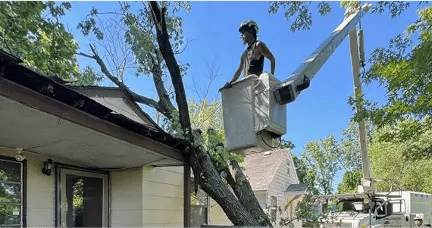
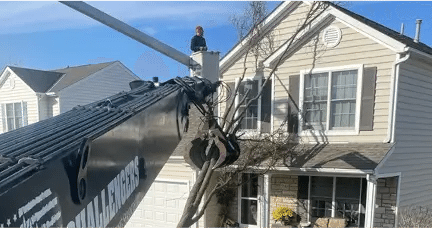
At Challengers Tree Service, we have built our business around fast, safe removals for exactly this kind of situation. Our crew owns and operates its own crane, which means hazardous or hard-to-access dead trees near homes, driveways, and power lines can often be removed without the delays that come from renting outside equipment.
Challengers Tree Service is licensed, insured, and bonded, and every removal includes full debris hauling so you’re not left with a yard full of logs and branches afterward. Challengers Tree Service is based in Grove City and serves homeowners and businesses throughout Columbus, Hilliard, Dublin, Powell, Westerville, Gahanna, Reynoldsburg, Blacklick, Orient, and Worthington, with routine work typically booked a few weeks out and true emergencies handled far sooner than that.
If a dead tree on your property has you wondering whether it can wait, a free estimate from our team will give you a clear, honest answer either way.
Frequently Asked Questions About Dead Trees on Your Property in Columbus, Ohio
How can I tell if a tree is completely dead versus just dormant?
A simple scratch test can help gently scrape a small section of bark on a branch. Green tissue underneath usually means the branch is alive; brown, dry tissue suggests it’s dead. Checking several branches across the canopy gives a clearer picture than checking just one.
Is it ever safe to wait on removing a dead tree?
It depends heavily on size, location, and how far decay has progressed. A small dead tree far from any structure carries far less urgency than a large one near a home, driveway, or power line. A professional assessment is the most reliable way to know which situation you’re in.
Can a dead tree be saved instead of removed?
No. Once a tree is fully dead, there’s no treatment that restores it. The only decisions left are when and how to remove it safely.
Will removing a dead tree damage my lawn or landscaping?
Professional crews use techniques and equipment suited to the site, including crane assistance when needed, specifically to minimize impact on lawns, gardens, and nearby structures during removal.
What should I do if a dead tree is leaning toward my house?
Treat this as an emergency and contact a tree service immediately rather than waiting for a scheduled estimate. A leaning dead tree near a structure is one of the higher-risk situations a property can face.
Summary Checklist: Dead Tree Warning Signs and Risk Factors
| Warning Sign | What It Suggests | Recommended Action |
| Peeling or Sloughing Bark | Loss of living tissue underneath | Schedule an assessment soon |
| No Leaf Buds During the Growing Season | Branch or whole-tree death | Have the extent confirmed by a professional |
| Fungal Conks at Base or Trunk | Internal decay is likely advanced | Prioritize removal, especially near structures |
| New or Worsening Lean | Root system failure in progress | Treat as urgent, especially after wet weather |
| Deep Vertical Trunk Cracks | Structural integrity compromised | Do not delay removal |
Final Advice
A dead tree rarely announces the moment it’s about to fail, which is exactly why waiting “until it looks worse” is the wrong strategy. The internal decay that leads to failure is usually well underway long before the outward signs are obvious, and the cost of a dead tree coming down on a roof, a car, or a power line is almost always far higher than the cost of removing it proactively.
If there’s a dead or visibly declining tree anywhere on your Columbus-area property, especially near a structure or a spot where people regularly walk or park, it’s worth having it looked at now rather than after the next storm. A quick, honest assessment can tell you whether you’re dealing with a low-priority cleanup item or a hazard that needs to come down right away.