
Key Takeaways
- Assume Danger: Always treat downed power lines as live and maintain a minimum 30-foot distance.
- Look Up and Down: Hazards exist both in the canopy (hanging limbs) and at the base (root heaving).
- Structural Compromise: Vertical cracks or “fresh” wood splits indicate a tree is in imminent danger of falling.
- Safety Over DIY: Storm-damaged wood is often under extreme tension; improper cutting can lead to fatal “kickbacks.”
- Immediate Documentation: Photograph damage immediately for insurance purposes before any cleanup begins.
Central Ohio weather is notoriously unpredictable. From high-velocity summer “derechos” to heavy winter ice accumulation, trees in Columbus and Grove City endure significant environmental stress. When a major storm passes, the immediate aftermath is often a chaotic scene of debris and damaged landscapes. However, the most dangerous hazards aren’t always the most obvious ones.
Following a strict protocol for hazard identification is the best way to protect your family and your property. Before you grab a rake or a chainsaw, use this professional guide to assess your surroundings safely.
Step 1: Electrical and Structural Clearance
The very first step in any post-storm protocol is identifying life-threatening hazards.
Downed Power Lines
Never assume a downed line is “dead.” In Columbus, many power lines are tangled in tree limbs during storms. If a tree has fallen on a line, or if lines are sagging near a tree you need to clear, stop immediately.
- Protocol: Call AEP Ohio and keep bystanders at least 30 feet away. Electricity can travel through the ground (ground gradient), especially if the soil is saturated with rainwater.
Structural Impacts
If a tree has landed on your home, garage, or vehicle, the structure may be under immense pressure. Do not attempt to pull the tree off with a vehicle or cut it into pieces. This can cause a “secondary collapse” of the structure.
- Protocol: Evacuate the area and wait for a professional assessment from Challengers Tree Service.
Step 2: Canopy Hazards (The “Widow-Makers”)
Once you have confirmed the area is electrically safe, perform a visual sweep of the upper canopy.
Hanging and Lodged Limbs
Professional arborists refer to detached branches caught in the canopy as “widow-makers” because they can fall without warning long after the storm has ended.
- What to look for: Look for branches that are no longer attached to the trunk but are resting on other limbs. Even a medium-sized branch falling from 30 feet carries enough force to be lethal.
Split Crotches and Trunk Cracks
V-shaped unions in trees are naturally weak points. High winds can cause these unions to begin splitting.
- What to look for: Look for “fresh” wood (light-colored wood showing through the dark bark) at the junctions of large branches. If you see a vertical crack extending down the trunk, the tree’s structural integrity is gone.
Step 3: Root System and Ground Assessment
A tree that looks healthy in the canopy can still be a “ticking time bomb” if the root system has failed.
Soil Heaving and Mounding
When a tree starts to tip, the root ball on the opposite side of the lean lifts out of the ground.
- What to look for: Look for “mounding” or “heaving” of the soil at the base of the tree. If you see freshly exposed roots or cracked pavement that wasn’t there before the storm, the tree is partially uprooted and could finish falling at any moment.
Saturated Lean
In Grove City and the surrounding areas, our heavy clay soils become “soupy” after heavy rain. This allows the roots to “slide” through the soil rather than snapping.
- What to look for: If a tree that was once straight now has a noticeable lean, and the soil around it is saturated, it is a high-priority emergency.
Step 4: The Danger of “Tension” Wood
Storm-damaged trees are often under extreme tension and compression. If a tree is bent over or resting on another object, it is like a giant, cocked spring.
If an untrained person makes a cut in a limb under tension, it can “snap back” or “kick back” with thousands of pounds of force. This is why DIY storm cleanup accounts for a high percentage of post-storm injuries. Professional crews use specialized “bore cuts” and rigging to release this energy safely and controlled.
Step 5: Professional Documentation
If your property has sustained damage, your insurance company will require proof that the damage was a direct result of the storm.
- Take Photos: From a safe distance, take wide-angle photos showing the tree’s position relative to your house.
Keep Your Property Safe with Challengers Tree Service
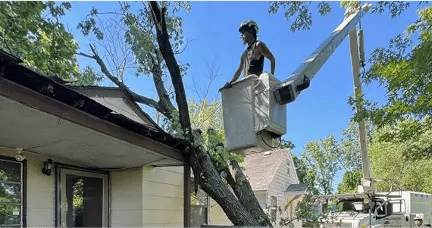
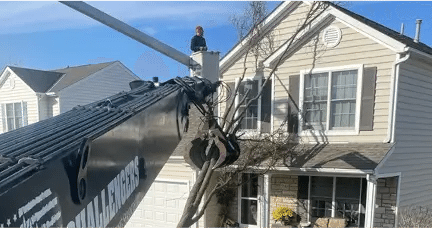
Storm damage doesn’t wait for business hours. At Challengers Tree Service, we specialize in identifying and removing high-risk hazards before they cause further injury or property damage. Whether you are in Hilliard, Dublin, or Westerville, our experienced crews are equipped with cranes and advanced rigging to handle the most complex emergency tree removals. We provide the expertise and documentation you need to protect your home and satisfy insurance requirements.
Frequently Asked Questions
1. How do I know if a leaning tree is an emergency?
If the lean is new (occurred during the storm) and you see soil heaving or roots pulling out of the ground, it is a critical emergency that requires immediate removal.
2. Is a branch hanging in the canopy really that dangerous?
Yes. These can fall at any time, especially when the wind picks back up or as the wood dries and shrinks. They are a major liability for anyone walking underneath.
3. Will insurance pay for emergency tree removal?
Typically, yes, if the tree has landed on a “covered structure” like your house or fence. If it just fell in the yard, coverage may be limited.
4. Can a tree with a split trunk be saved?
In some cases, cabling and bracing can help, but if the split is deep and involves the main trunk, removal is usually the only safe option to prevent future property damage.
5. What should I do if a tree is touching a power line?
Do not touch the tree. Call AEP Ohio immediately. Even if the tree isn’t sparking, it can become energized and lethal.
6. Do you offer debris hauling after storm cleanup?
Yes. Our emergency service includes the full removal of all logs, branches, and debris, leaving your property safe and clean.
7. Why shouldn’t I use my own chainsaw for storm cleanup?
Trees involved in storms are often under complex stresses (tension and compression). Cutting the wrong way can cause the tree to shift or “kick back” violently.
8. How quickly can Challengers Tree Service respond after a storm?
We offer 24/7 emergency response. We prioritize situations where trees have hit homes or are blocking essential access roads and driveways.
Summary Checklist: When to Call for Removal
| Condition | Risk Level | Recommended Action |
|---|---|---|
| Downed power lines in tree limbs | Critical | Evacuate the immediate area, keep everyone away, and contact the utility provider and emergency responders immediately |
| Hanging widow-maker limbs | High | Secure the area beneath the canopy and arrange professional hazard limb removal |
| Soil mounding or root plate lifting at the base | High | Treat as a potential root failure emergency and request immediate professional assessment |
| Fresh trunk splitting or exposed wood | High | Keep a safe distance, as structural integrity may be compromised, and arrange an urgent professional response |
| Bent trees under stored tension | Moderate to High | Do not attempt cutting or movement, as stored tension can release unpredictably and dangerously |
Final Advice
If you notice any of these warning signs, do not wait for a storm to force the issue. A professional assessment from an arborist can determine if the tree can be saved through specialized care or if it must be removed to protect your property. For expert service in the Columbus area, contact the team at Challengers Tree Service today.