Key Takeaways
- Look beyond size: A large tree is not necessarily overgrown unless its growth creates conflicts or affects its structure and health.
- Check roof and utility clearance: Branches touching roofs, gutters, siding, or utility lines can indicate that a tree has outgrown its available space.
- Watch the root zone: Lifting sidewalks, driveways, or other hard surfaces may indicate root conflicts.
- Inspect dense canopies: Congested branches can restrict airflow, reduce light penetration, and create structural concerns.
- Avoid aggressive pruning: Removing too much canopy at once can stress a tree and encourage weak regrowth.
- Prune proactively: Regular structural pruning can prevent small growth problems from becoming major conflicts.
- Know when removal is appropriate: Some trees have simply outgrown their location and may be better replaced with a species suited to the available space.
Trees grow slowly enough that homeowners can easily miss the point where a healthy canopy becomes genuinely overgrown. On many Columbus properties, a tree planted decades ago has gradually outgrown its original space, pressing branches against the roof, shading the lawn, or developing a dense canopy that creates additional storm exposure.
Overgrowth is not automatically a problem. A large, healthy canopy can provide valuable shade, beauty, and habitat. The concern begins when the tree’s size or structure creates conflicts with buildings, utilities, hardscapes, other plants, or the tree itself. Recognising these warning signs early can help homeowners address the problem through appropriate pruning before more extensive work becomes necessary.
Why Overgrowth Sneaks Up on Homeowners
Tree growth happens gradually, making changes difficult to notice from one season to the next. A tree may add only modest amounts of height or canopy spread annually, but over a decade those changes can become significant.
Many Columbus-area properties contain mature trees planted when homes, driveways, patios, or landscaping were different from what exists today. A tree that had plenty of room when it was young may eventually grow into a roof, fence, utility line, or neighbouring tree. Regular inspections allow homeowners to address these conflicts through smaller pruning interventions rather than waiting until years of unmanaged growth require extensive corrective work.
Branches Touching or Overhanging the Roof
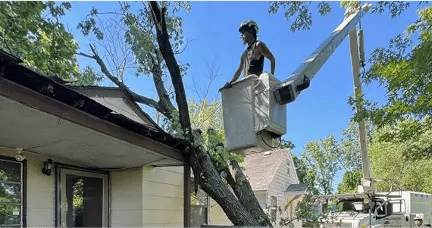
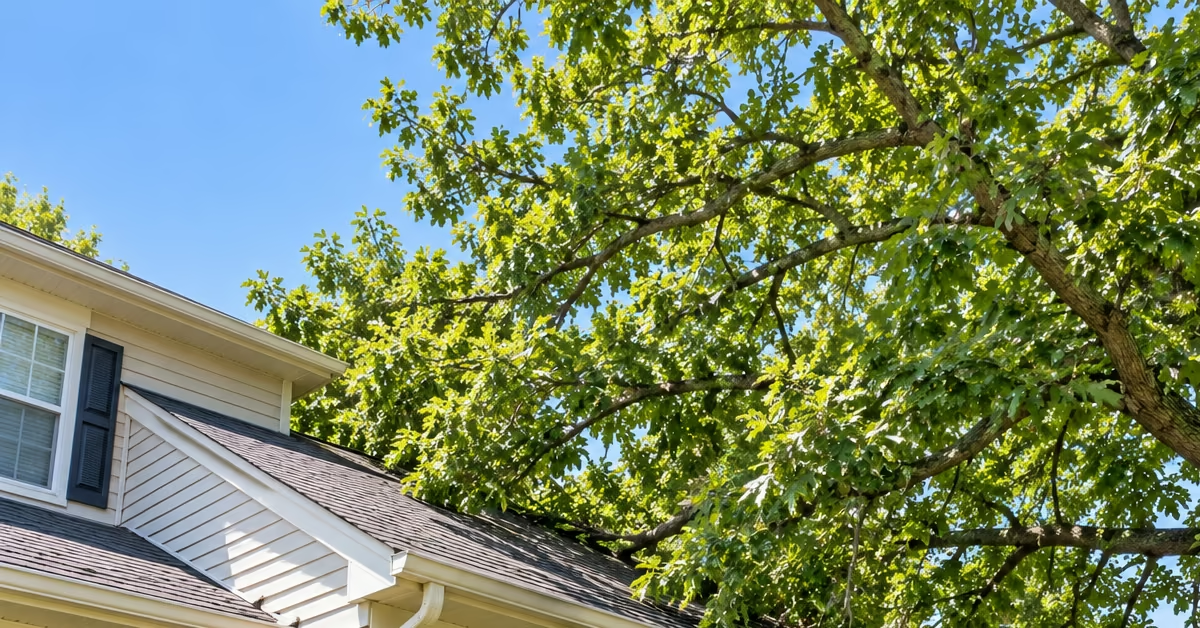
Branches touching the roof, siding, gutters, or chimney are among the clearest signs that a tree may have outgrown its available space. Repeated contact can damage roofing materials and siding, while branches close to a structure can provide pathways for wildlife to reach the home.
Overhanging branches also drop leaves, seeds, and small twigs into gutters, increasing maintenance and potentially contributing to drainage problems. Branches extending toward the roof should be evaluated before they begin making regular contact, particularly if the tree is still actively growing.
Homeowners should also pay attention to branches near utility lines. Trees growing into or around electrical lines require professional attention and should never be pruned by an untrained homeowner.
Canopy Blocking Light From the Landscape
An expanding canopy can eventually block much of the sunlight reaching grass, gardens, shrubs, and other plants below. Thin turf, declining sun-loving plants, and garden beds that no longer perform as they once did can indicate that the canopy has become too dense for the surrounding landscape.
Selective pruning may allow more filtered light into the lower landscape without drastically changing the tree’s overall appearance. However, pruning should focus on removing appropriate branches rather than simply cutting large sections of healthy canopy.
Roots Lifting Sidewalks or Driveways
Overgrown trees can also create problems below ground. Surface roots may lift sidewalks, patios, or driveways as they expand, particularly when a tree has been planted in a confined area. Small pavement cracks or uneven sections can be early warning signs. However, root pruning should never be treated as a simple DIY project. Removing major roots can affect a tree’s stability and health, especially when those roots provide significant structural support.
Before cutting roots, have the tree and the surrounding site evaluated to determine whether root pruning, hardscape modification, pruning of the canopy, or eventual tree removal is the safest solution.
Dense, Congested Canopy With Poor Airflow
A tree that has gone many years without structural pruning may develop a congested canopy containing crossing, rubbing, inward-growing, or poorly attached branches. Dense growth can reduce light and airflow through the canopy and may increase the amount of material available to catch wind, rain, snow, or ice.
Selective pruning can improve branch spacing and canopy structure while maintaining most of the tree’s healthy foliage. The goal should be to create a balanced structure rather than simply remove as much growth as possible.
Branches Crowding Other Trees or Structures
Mature trees can eventually grow into neighbouring trees, fences, garages, decks, or other landscape features. Crowded trees may develop uneven canopies as branches compete for available light and space.
In many cases, selective pruning can restore separation without removing either tree. Where several trees have become heavily intertwined, however, an arborist may need to assess their structure individually and determine which branches or trees should be retained.
A Tree Looks Too Large for Its Location
Sometimes the simplest warning sign is the relationship between the tree and its surroundings. If a tree has grown so large that it overwhelms a small yard, extends substantially beyond its intended planting area, or requires repeated heavy pruning to maintain clearance, it may no longer be well suited to the site. This is particularly common with fast-growing species planted for quick shade. A tree that was appropriate for a young landscape may become difficult to manage as surrounding buildings, utilities, and landscaping remain fixed while the tree continues to grow.
What to Do About an Overgrown Tree
- The appropriate response depends on the tree species, health, structure, location, and reason for the overgrowth. Selective thinning may improve light and airflow, while crown reduction can address limited clearance when performed correctly.
- Homeowners should avoid trying to correct years of uncontrolled growth with aggressive pruning. Removing excessive amounts of live canopy can stress the tree and encourage weak, rapidly growing shoots.
- If a tree has become too large for its location, repeated severe pruning may not be a sustainable solution. Where structural defects, extensive decline, or severe space conflicts exist, removal and replacement with a species better suited to the site may be the more practical long-term option.
How Often Should Overgrown Trees Be Evaluated?
- Established trees do not necessarily require the same pruning schedule. A healthy tree in an open area may need less frequent attention than a fast-growing tree located close to a house or utility line.
- As a general maintenance approach, homeowners can have mature trees inspected every few years and arrange pruning when structural problems or clearance issues appear. Young trees can benefit from earlier structural pruning because small defects are usually easier to correct before branches become large.
- Regular evaluation is especially useful after major storms, construction activity near roots, or periods of drought and other environmental stress.
When Tree Removal Becomes the Better Option
Pruning cannot solve every overgrowth problem. Removal may be appropriate when a tree has become severely incompatible with its location, has extensive decay or structural damage, or would require repeated aggressive pruning to maintain safe clearance.
Large trees close to houses, driveways, roads, and utility infrastructure deserve particular attention. A professional assessment can determine whether the tree can be safely retained through pruning and monitoring or whether removal and replacement make more sense.
How Challengers Tree Service Can Help
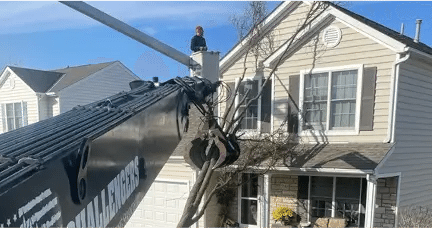
Challengers Tree Service can help Columbus and Grove City homeowners determine whether an overgrown tree needs selective pruning, structural correction, removal, or ongoing monitoring. Our team can evaluate canopy density, branch structure, clearance from buildings, and other site conditions before recommending appropriate work. When a mature tree has simply outgrown its location, we can help homeowners choose a practical solution that prioritises tree health, property clearance, and safety.
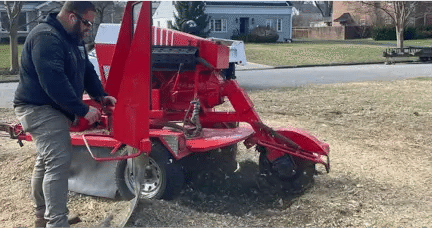
Challengers Tree Service offers a wide range of tree services such as – tree trimming and pruning, tree removal, stump grinding, and debris hauling.
Frequently Asked Questions About Overgrown Trees in Columbus, OH
How do I know if my tree needs trimming or full removal?
If pruning can safely restore appropriate clearance and improve the tree’s structure, trimming may be sufficient. Removal may be considered when the tree has severe structural problems, extensive decline, or has outgrown the site to the point that repeated corrective pruning is no longer practical.
How close is too close for branches near my roof?
Branches that touch or repeatedly approach the roof, gutters, or siding should be evaluated. The appropriate clearance varies by tree and structure, so a professional assessment is preferable to relying on a single distance for every property.
Can overgrown tree roots damage my driveway or foundation?
Tree roots can contribute to lifted pavement and other hardscape conflicts. However, root-related foundation damage is more complex and should not automatically be attributed to a nearby tree. Professional assessment can help identify the actual cause and determine whether root pruning is appropriate.
How often should a tree be pruned to prevent overgrowth?
The ideal schedule depends on species, age, growth rate, location, and previous pruning. Many mature trees benefit from periodic structural inspections rather than waiting until branches create obvious property conflicts.
Is it better to thin a dense canopy or reduce its overall size?
It depends on the problem. Thinning can improve spacing, light, and airflow, while reduction is used when a tree’s overall dimensions need to be brought back within a reasonable space. A qualified tree professional can determine which approach is appropriate.
Summary Checklist: Overgrown Tree Assessment
| Warning Sign | What It May Indicate | Possible Response |
| Branches touching roof | Insufficient clearance | Selective pruning |
| Dense interior canopy | Poor structure or airflow | Structural thinning |
| Roots lifting pavement | Root-space conflict | Professional assessment |
| Branches crowding trees | Limited growing space | Selective pruning |
| Excessive canopy size | Tree outgrowing site | Crown reduction or removal |
| Dead or cracked limbs | Structural hazard | Prompt evaluation |
| Growth near utility lines | Safety concern | Professional utility clearance |
| Repeated heavy pruning | Poor species/site match | Consider replacement |
Final Advice
An overgrown tree is not necessarily an unhealthy tree, but growth that conflicts with buildings, utilities, hardscapes, or other trees deserves attention. Branches touching roofs, dense canopies, lifting roots, crowded growth, and excessive canopy size are all reasons to have a mature tree evaluated.
Avoid attempting to correct years of growth with aggressive DIY pruning. Proper structural pruning can often address overgrowth while preserving a healthy tree, but some trees have simply outgrown their original location. In those cases, removal and replacement may provide a safer and more sustainable long-term solution.
Challengers Tree Service can assess overgrown trees throughout the Columbus area and recommend practical options based on the tree and property. From trimming & pruning, tree removal to stump grinding and debris hauling, our team can help homeowners manage mature trees safely and responsibly.