
Key Takeaways
- Detecting Hidden Decay: Inspections uncover dangerous internal rot and root defects that are invisible to homeowners but cause trees to fail in high winds.
- Evaluating Saturated Soil: Inspectors assess regional loamy soil conditions to identify waterlogged root plates at risk of total windthrow uprooting.
- Risk Prioritization: Professional assessments provide a structured mitigation plan, categorizing immediate hazards, necessary pruning, and tree preservation needs.
- Proactive Financial Defense: Scheduling preventive care before storm season avoids premium emergency rates and provides documentation for insurance claims.
Spring and fall storms in Central Ohio frequently cause power outages when tall tree branches contact overhead utility lines. Franklin County property owners with mature trees often face critical decisions about tree maintenance near electrical infrastructure. The question isn’t just about preventing outages; it’s about understanding legal responsibilities, avoiding liability, and ensuring personal safety when trees grow near power lines.
For homeowners across Franklin County, including Columbus, Grove City, Hilliard, Dublin, Westerville, and Gahanna, understanding Ohio’s utility line clearance rules is essential. Ohio law establishes specific clearance requirements between trees and utility lines, but property ownership and maintenance responsibilities depend on where the tree stands. This article explains Ohio’s clearance regulations, property owner obligations, liability risks, and how to maintain tall trees safely near power lines.
Understanding Ohio’s Utility Line Clearance Rules
Ohio follows the National Electrical Safety Code (NESC), which mandates minimum clearance distances between trees and utility lines. For primary distribution lines, utilities must maintain 10 to 15 feet of clearance depending on voltage. For secondary service lines running from poles to homes, clearance requirements are typically 3 to 10 feet. These distances prevent branches from contacting wires during normal growth, wind movement, or storm conditions.
Ohio public utilities, including AEP Ohio and Columbus Southern Power, are responsible for maintaining clearance on their side of the service point. The service point is where utility lines connect to your home’s electrical system. Utilities trim or remove trees on public property and along distribution lines to meet NESC standards. However, once lines reach your property’s service point, maintenance responsibilities shift to the property owner.
Ohio’s rules distinguish between distribution lines (utility-owned) and service entrance conductors (owner-owned). Utilities maintain clearance up to the service entrance, but property owners must maintain clearance from the service entrance to their home. This distinction is critical for Franklin County homeowners with tall trees near service lines.
Property Owner Responsibilities Near Utility Lines
As a Franklin County property owner, you are responsible for maintaining tree clearance on your property from the service entrance to your home. This includes – service lines running from utility poles to your house, garage, or other structures. If branches grow within 10 feet of these lines, you must trim or remove them to prevent contact.
Property owners cannot trim trees near utility lines without proper training and equipment. Contacting wires can cause severe injury, death, or massive electrical fires. Ohio law requires property owners to hire licensed, insured tree professionals for work near service lines. DIY trimming near power lines violates safety codes and exposes owners to criminal liability if injuries occur.
You’re also responsible for trees that overhang utility lines on your property. Even if the tree trunk sits on your land, branches extending over utility lines must be maintained to prevent contact. Utilities may issue violation notices if trees threaten their infrastructure, requiring you to trim or remove the tree within a specified timeframe.
Liability for Tree Contact with Utility Lines
When tree branches contact utility lines, liability depends on negligence and ownership. If a healthy tree on your property contacts service lines due to normal growth, and you failed to maintain clearance, you’re liable for damage to utility infrastructure, power outages affecting neighbors, and property damage caused by outages. Your insurance may cover these costs, but gaps in coverage can leave you personally responsible.
If a tree on your property contacts utility lines due to storm damage, liability typically shifts to the utility company for infrastructure damage. However, if the tree was visibly dead, diseased, or hazardous before the storm and you knew or should have known you may still be liable for negligence. Ohio courts consider whether you took reasonable steps to address known hazards.
Trees on public property that contact utility lines are the utility company’s responsibility. However, if a public tree falls due to your negligence, such as improper trimming that weakened it, you may share liability. Property owners should document tree conditions and communicate with utilities about potential hazards.
Ohio Public Utility Obligations and Limitations
Ohio public utilities must maintain clearance on distribution lines and respond to violation notices within 30 days. Utilities conduct regular inspections and proactively trim trees along their infrastructure. However, utilities have limited authority on private property. They cannot trim or remove trees on your land without permission, even if branches threaten distribution lines.
When utilities identify trees threatening distribution lines on private property, they issue violation notices requiring property owners to address the issue. If owners fail to comply, utilities may seek court orders for removal or trim trees at the owner’s expense. In extreme cases, utilities may disconnect service until hazards are resolved.
Utilities also have emergency authority to trim or remove trees immediately threatening infrastructure during storms. They must notify property owners within 72 hours of emergency work and provide cost estimates if owners are responsible. Property owners should review utility notices carefully and respond promptly.
The Benefits of Professional Utility Line Clearance
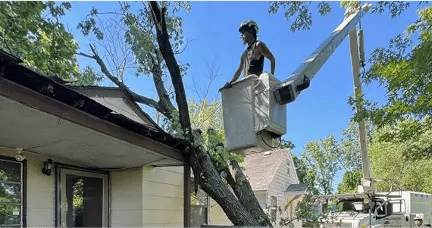
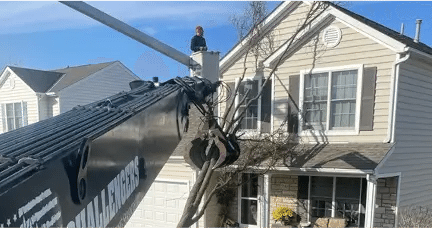
Professional tree services offer critical advantages for utility line clearance. Certified arborists understand NESC clearance requirements, identify hazardous trees, and perform precision trimming that maintains tree health while meeting safety standards. They use specialized equipment including pole pruners, bucket trucks, and insulated tools designed for work near electrical lines.
Professional crews are trained in electrical safety, knowing how to avoid contact, recognize warning signs, and respond to emergencies. They coordinate with utility companies to de-energize lines before work begins. Professionals also handle debris hauling and site cleanup, leaving properties hazard-free.
Licensed tree companies carry insurance covering accidents, injuries, and property damage. If uninsured workers harm utility infrastructure or injure themselves on your property, you may face massive liability. Insurance protects you from these risks while ensuring compliance with Ohio licensing requirements.
Cost Considerations and Long-Term Value
Utility line clearance costs vary by tree size, location, and complexity.
- Small trees under 20 feet cost $150 to $400 for trimming.
- Medium trees 20 to 40 feet cost $400 to $800.
- Large trees over 40 feet cost $800 to $2,500+. Emergency removal after storms may cost 20-50% more than scheduled work.
While professional clearance costs more than DIY, it delivers long-term value. Proper trimming extends tree life, prevents costly emergency removal, and avoids liability from contacts. Healthy trees improve property value and curb appeal. Investing in regular clearance maintenance prevents expensive violations and insurance claims.
Many homeowners overlook hidden DIY costs. Improper trimming shocks trees, causing dieback. Cutting near wires without de-energizing causes injuries. Removing trees without permits violates codes. These errors cost far more than professional service from the start.
Making the Right Call for Your Property
Deciding when to trim or remove trees near utility lines requires evaluating tree health, location, and clearance distance. Start by measuring branch-to-line distance. If branches are within 10 feet of service lines, schedule professional trimming immediately. If trees are dead, diseased, leaning, or unstable, removal is safer than trimming.
Consult a certified arborist for professional assessment. They evaluate root stability, disease presence, and clearance needs to recommend trimming versus removal. Get written estimates comparing options. Factor in long-term maintenance, violation risks, and insurance coverage.
Timing matters too. Schedule trimming during spring or fall when trees grow actively. Avoid summer trimming during peak heat. Plan removal before storm season to prevent emergency costs. Coordinate multiple trees during the same visit to reduce costs.
Whether you’re dealing with a tree emergency or planning preventive tree care, Challengers Tree Service provides dependable, professional solutions backed by decades of experience. As a fully licensed and insured company, we offer 24/7 emergency response and expert tree care services for residential and commercial properties.
Based in Grove City, OH, Challengers Tree Service proudly serves homeowners and businesses throughout the greater Columbus area, including Hilliard, Dublin, Powell, Westerville, Gahanna, Reynoldsburg, Blacklick, and Orient. Our skilled crews specialize in tree removal, tree trimming and pruning, stump grinding and removal, shrub removal and trimming, debris hauling, lot and land clearing, and 24/7 emergency tree service throughout the region. Challengers Tree Service stands out for safety, professionalism, and customer satisfaction, using advanced equipment to complete jobs precisely. We offer fast estimates and routine jobs booked 3 weeks out.
Frequently Asked Questions About Ohio’s Utility Line Clearance Rules by the Homeowners in Franklin County
Can I trim branches near utility lines myself in Franklin County, Ohio?
No. Ohio law requires licensed, insured professionals for work near service lines. Contacting wires can cause severe injury, death, or fires. Hire certified arborists.
Who is responsible for trimming trees near utility lines in Franklin, Ohio?
Utilities maintain clearance on distribution lines. Property owners maintain clearance from service entrance to home. Check your utility’s service map for specifics.
What happens if my tree contacts utility lines?
If you’re negligent (failed to maintain clearance), you’re liable for damage and outages. If storm damage caused contact, utility liability typically applies unless the tree was hazardous beforehand.
How often should I trim trees near utility lines?
Trim annually or biannually for fast-growing species. Monitor clearance quarterly. Schedule professional trimming when branches approach 10 feet from lines.
Can utilities trim trees on my property without permission?
No. Utilities need permission for private property work unless emergency hazards exist. They may issue violation notices requiring owner action.
Does my insurance cover tree removal near utility lines?
Most policies cover removal if trees damage covered structures. Routine trimming may not be covered. Check your policy for tree removal endorsements.
Summary Checklist: Utility Line Clearance Decision Guide
| Situation | Trim or Remove? | Call a Pro? |
|---|---|---|
| Branches Within 10 Feet of Power Lines | Trim | Yes, urgently. Utility clearance requires specialized training. |
| Dead Tree Near Power Lines | Remove | Yes, immediately. Dead trees can fail without warning. |
| Diseased Tree with Significant Decay | Remove if Severe | Yes, professional assessment is essential. |
| Tree Leaning Toward Power Lines | Remove | Yes, urgently. Structural failure can occur at any time. |
| Healthy Tree with Excessive Overgrowth | Trim | Yes, for safe and precise utility clearance pruning. |
| Storm-Damaged Tree on Power Lines | Remove | Yes, emergency response required immediately. |
Final Advice
Navigating the intersection of Ohio utility line clearance laws and residential landscape preservation requires an understanding of easement rights and utility safety standards. Property owners must recognize that utility providers possess the legal right to cross property lines and prune any mature foliage encroaching upon the 10-foot primary distribution zone or transmission right-of-way. While directional pruning methods may initially leave trees with an unconventional shape, these techniques represent the industry standard for maintaining healthy wood fibers while minimizing aggressive sprout regrowth and storm failures.
Never attempt to prune limbs, manage structural canopy cracks, or cut down trees located anywhere near an active overhead power asset yourself. Approaching an energized line without certified training carries an immediate threat of severe injury or electrocution. Property owners are encouraged to practice proactive planting by selecting low-growing ornamental species for utility corridors and scheduling private tree maintenance for individual service drop lines well ahead of severe weather seasons. For specialized, low-impact tree preservation, risk evaluations, or general landscape care outside of utility zones, always secure the assistance of reliable tree professionals in Franklin County, Ohio to protect both your local environment and your long-term property investment.