Key Takeaways
- Yes, a tree can absolutely be removed while leaving the stump in place; the two services are separate and priced separately.
- Leaving a stump saves money upfront but comes with long-term trade-offs like tripping hazards, regrowth, and pest attraction.
- Stump grinding is the most common way to fully address a stump without the extensive excavation full stump removal requires.
- Certain situations, like a stump in a lawn, driveway, or garden bed, make stump grinding far more worthwhile than others.
- A stump left untreated can still send up new sprouts for certain species, requiring ongoing maintenance.
- Deciding whether to grind a stump depends on your plans for the space, budget, and how much the stump bothers you visually or functionally.
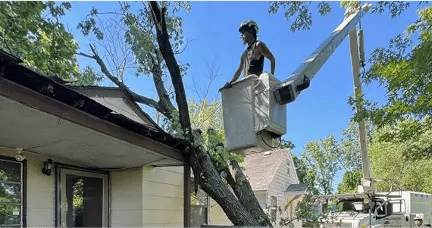
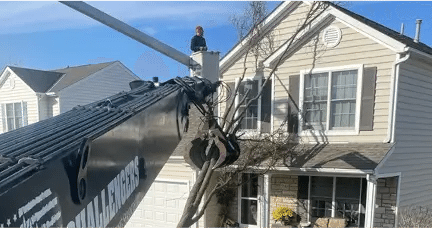
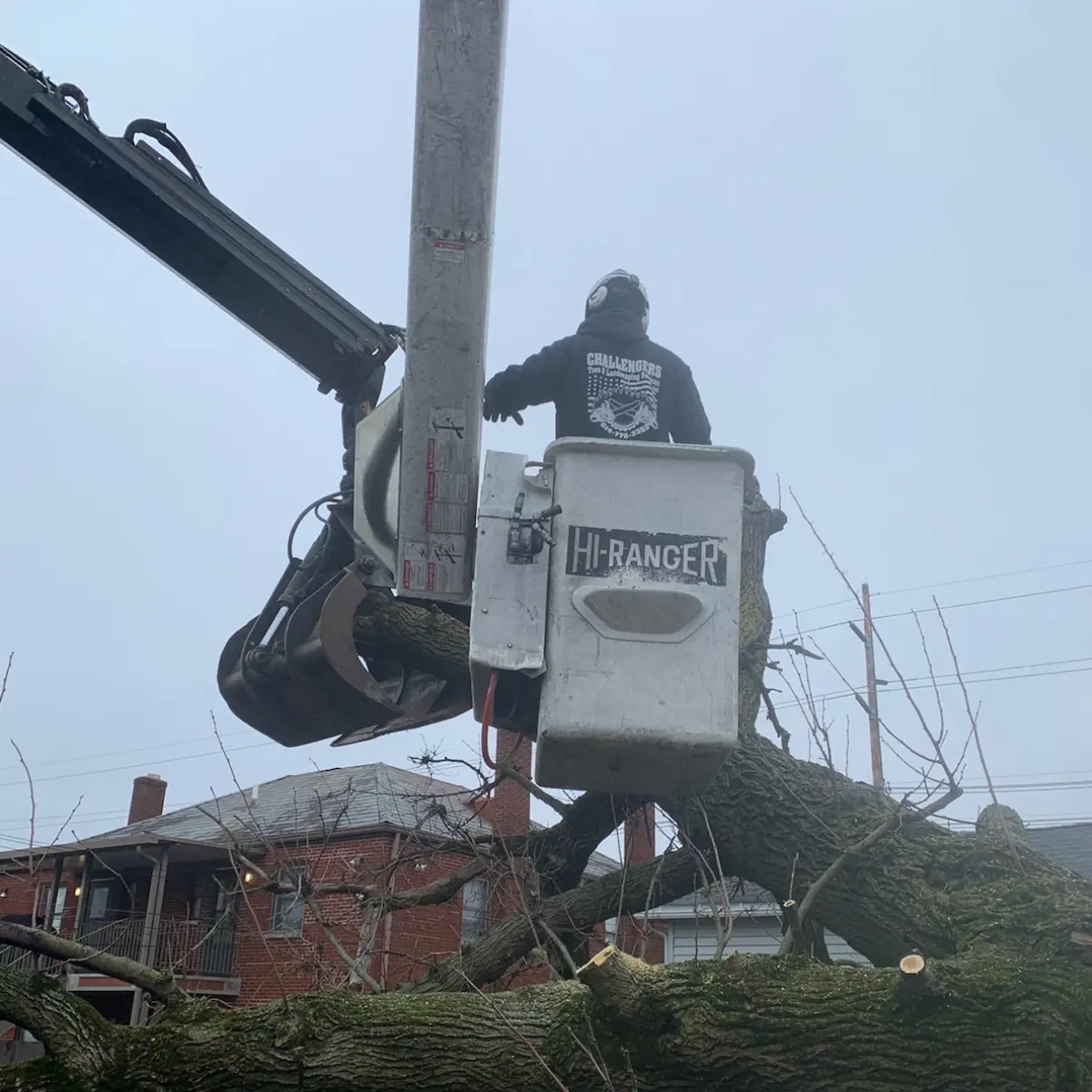
Yes, you can remove a tree without removing the stump. Tree removal and stump removal are separate services, so a crew can cut down the tree, remove the trunk and branches, and leave the remaining stump in the ground. The stump can then be ground down or fully excavated later, depending on your budget, plans for the space, and the stump’s location.
Leaving a stump in place is a reasonable option when it does not interfere with walking, mowing, landscaping, or construction. However, homeowners should consider potential regrowth, decay, pests, and future maintenance before deciding to leave the stump untreated.
Why Some Homeowners Choose to Leave the Stump
Some of the reasons homeowners decide to leave the stump are as follows –
- Lower Upfront Cost: Skipping stump grinding or excavation reduces the overall cost of tree removal because stump work is usually charged separately.
- No Immediate Plans: Homeowners may leave the stump when they have no immediate plans to landscape, build, or use the space where the tree stood.
- Low-Traffic Location: A stump tucked away from walkways, lawns, and frequently used areas may not create an immediate safety or maintenance concern.
- Garden Feature: Some homeowners intentionally keep a stump as a base for a birdbath, planter, or other garden decoration.
- Future Decision: Leaving the stump allows homeowners to postpone the additional expense and decide later whether grinding or excavation is worthwhile.
The Tradeoffs of Leaving a Stump in Place
While leaving a stump is a valid short-term choice, it does come with downsides worth weighing.
- A stump in a lawn or high-traffic area is a tripping hazard and a nuisance for mowing, since equipment has to maneuver around it indefinitely.
- As the stump decays over months and years, it can attract wood-boring insects, including species that may eventually spread to nearby healthy trees, which is a particular concern in urban and suburban Columbus yards where trees are often planted close together.
- Certain species, especially those prone to suckering like some maples and elms, will continue sending up new sprouts from the stump and root system, creating an ongoing maintenance task that a fully removed stump would eliminate.
How Stump Grinding Works
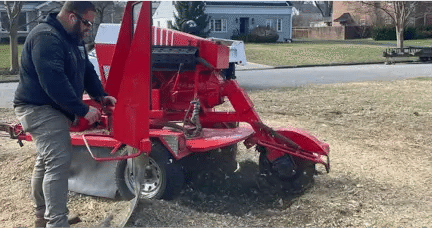
Stump grinding is a common and cost-effective way to remove a stump. A dedicated tree service firm in Grove City, OH uses a specialized grinding machine. Its rotating cutting wheel chips away the stump and upper roots. The machine can usually grind 4 to 12 inches below ground level. The depth depends on the equipment and how you plan to use the space. The resulting wood chips can often stay on-site as mulch or be removed on request.
Grinding is significantly faster and less invasive than full excavation. It eliminates the visible stump and most tripping and mowing concerns without disturbing the surrounding soil extensively.
When Full Stump Excavation Makes More Sense
In some cases, stump grinding may not be enough. Full excavation may be better for major projects. If you plan to build a structure, install a pool, or regrade the area, removing the stump and more of its root system may be necessary.
Excavation is more labour-intensive than grinding. It can also disturb nearby soil and landscaping. For this reason, it is usually best when you need the entire area cleared for construction or planting.
Species-Specific Considerations for Columbus Yards
Some tree species are more prone to problematic stump behavior than others.
- Silver maples, a common tree throughout central Ohio, are known for vigorous sprouting from cut stumps. This means an untreated stump can turn into a cluster of new, weakly attached shoots within a single growing season if not managed.
- Ash stumps, common across Columbus due to the emerald ash borer, don’t typically sprout as aggressively but can harbor beetle larvae if left in place.
- Oaks and other slower-growing hardwoods tend to sprout less aggressively than maples but can still take years to fully decompose if left untreated.
Understanding how your specific species tends to behave after removal can help you decide whether stump grinding is worth prioritizing right away or something that can reasonably wait.
What Happens to the Roots Below the Surface
One detail that surprises many homeowners is that neither grinding nor even full excavation removes every trace of a tree’s root system.
- Grinding addresses the stump and the upper several inches of roots, but the larger lateral roots often extend many feet outward from the trunk. They remain in the ground, slowly decomposing over the following years.
- Full excavation removes more of the root mass near the trunk. However, it cannot remove every root from a mature tree. Large roots may extend several feet beyond the stump. Some may also grow beneath patios, driveways, or foundations.
- In practice, this means even after aggressive stump removal, you may notice minor settling in the soil above old root lines as they decompose over time, which is a normal part of the process rather than a sign anything went wrong.
Making the Right Call for Your Property
There’s no universally correct answer to whether you should grind a stump immediately after tree removal. A stump tucked in a back corner of a large property, away from foot traffic and lawn equipment, is a very different situation than one sitting in the middle of a front yard or near a walkway. Columbus homeowners planning to landscape, reseed, or sell their home in the near future generally benefit from grinding sooner rather than later, while those with no immediate plans for the space have more flexibility to wait.
Challengers Tree Service can help Columbus homeowners handle both tree removal and stump removal based on their property’s needs. Our team can safely remove unwanted, damaged, or hazardous trees while keeping the surrounding area protected. We can also leave the stump in place if you do not need immediate stump work. When you want to clear the remaining stump, our stump grinding service can remove it below ground level.
Challengers Tree Service can also help you decide whether grinding or full removal makes more sense for your plans. Our team can also address stumps that create mowing, landscaping, or safety problems. With separate tree removal and stump grinding services, we give Columbus homeowners the flexibility to choose what works best for their property.
Frequently Asked Questions About Stump Removal in Columbus, OH
Does removing a tree automatically include stump removal in Columbus, OH?
No. Tree removal and stump removal are typically priced and performed as separate services, so you can choose to leave the stump in place if you prefer.
How long does it take for a stump to decay naturally?
Depending on the species and size, a stump can take anywhere from several years to over a decade to fully decompose on its own without grinding or excavation.
Is stump grinding messy?
Grinding produces a pile of wood chips at the site, which can be left as mulch or hauled away, but it doesn’t disturb the surrounding lawn or soil nearly as much as full excavation.
Will a ground stump grow back?
Grinding removes the visible stump and much of the upper root system, which significantly reduces the chance of resprouting for most species, though some persistent species may still send up occasional shoots from remaining roots.
Can I plant a new tree where a stump used to be?
Grinding alone may leave enough old root material behind to make replanting difficult; full excavation is usually recommended if you plan to plant a new tree in the exact same spot.
Why do Columbus homeowners deal with a lot of ash stumps?
The emerald ash borer has killed a large number of ash trees across central Ohio in recent years, leading to widespread ash removals and, in many cases, stumps left to be addressed later.
How much does stump grinding typically cost in Columbus, OH?
Cost generally depends on stump diameter and accessibility, and it’s usually less expensive than full excavation, though pricing varies by job.
Summary Checklist: Factors to Consider Before Stump Removal
| Consideration | What to Evaluate |
| Stump location | Determine if it’s a tripping hazard or mowing obstacle |
| Species behavior | Check whether the species is prone to resprouting |
| Future plans | Consider upcoming landscaping, construction, or replanting |
| Pest risk | Factor in whether the species can harbor wood-boring insects |
| Budget | Weigh the added cost of grinding or excavation against your timeline |
| Grinding vs. excavation | Choose based on whether the ground itself needs to be cleared |
| Professional input | Ask your tree service which option fits your situation |
Final Advice
If a stump sits somewhere that doesn’t interfere with mowing, walking, or your future plans, it’s perfectly reasonable to leave it and decide on grinding later. If it’s in a high-traffic area, a lawn you maintain regularly, or a spot prone to resprouting, addressing it sooner tends to save hassle down the road. Choose full excavation only if you’re planning construction or replanting in that exact location, since grinding is sufficient for most other situations. Ask about species-specific resprouting risk, especially for maples, before deciding to wait. Whatever you choose, get a clear, separate quote for removal and stump work so there’s no confusion about what’s included.
Challengers Tree Service offers both tree removal and stump grinding throughout Columbus, and we’re happy to walk you through the right option for your yard and your timeline.
Reviewed by a Licensed Arborist
This article has been reviewed by a licensed arborist to ensure accuracy regarding tree removal practices, stump grinding methods, and species-specific behavior in central Ohio.