Key Takeaways
- Ohio generally follows the common law “self-help” rule, which allows a property owner to trim branches and roots that cross onto their property, up to the boundary line.
- You cannot enter your neighbor’s property without permission, cut anything beyond the property line, or take action that kills or seriously damages the tree.
- Doing the trimming poorly, or in a way that harms the tree’s health or structural integrity, can expose you to liability even if the branches were legitimately overhanging your property.
- Talking to your neighbor first, even though it’s not legally required, resolves most situations without ever needing to invoke self-help rights.
- Hiring a licensed, insured tree service protects you from liability risk and ensures the work is done correctly the first time.
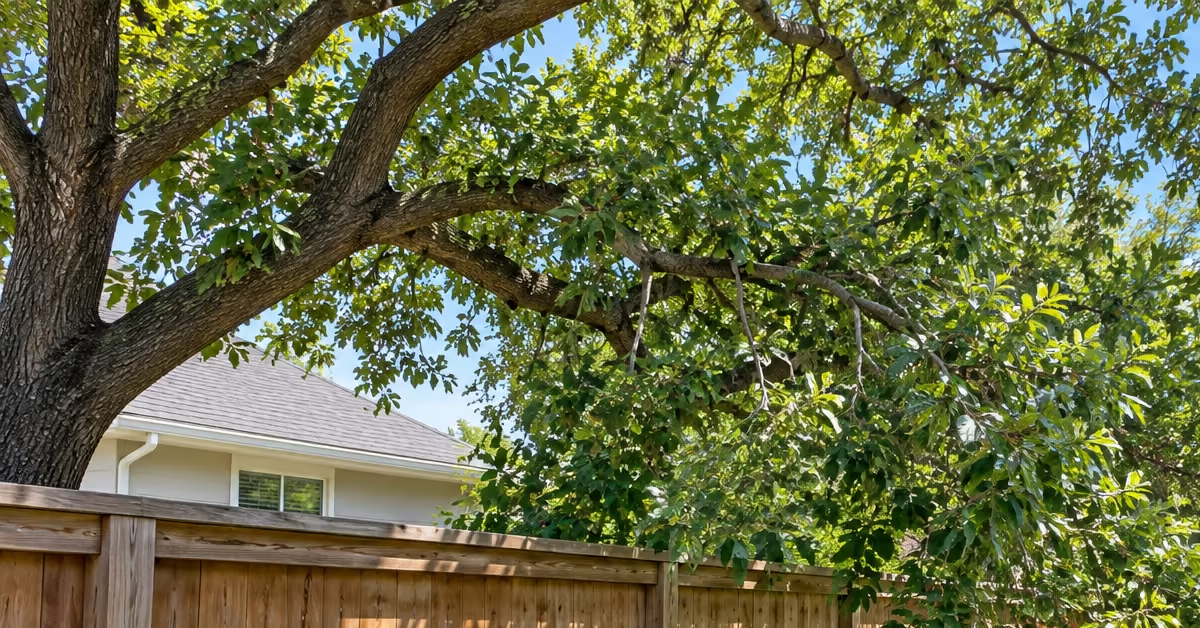
It’s one of the most common neighbor disputes in residential Columbus, OH neighborhoods: a tree on one property grows branches that extend over the fence, driveway, or yard next door. Leaves clog gutters, fruit drops on a patio, or branches simply block sunlight where a garden used to thrive. The question homeowners usually ask at that point is straightforward: can I just cut it myself? The short answer is generally yes, within specific limits. Here’s what that actually means in practice.
The General Rule: Self-Help Trimming Rights
Ohio, like most states, follows a common law principle sometimes called the “self-help” doctrine when it comes to overhanging branches and encroaching roots. In broad terms, this means a property owner has the right to trim back branches or roots from a neighbor’s tree that cross onto their own property, without needing the neighbor’s permission to do the trimming itself. This is a long-standing common law principle that isn’t written into a specific state statute, so it’s worth confirming details with a local attorney if your situation is complicated or high-value. But as a general framework, self-help trimming rights typically include:
- The right to cut branches or roots back to your property line.
- No requirement to get the tree owner’s consent before trimming.
- No obligation for the tree owner to trim the tree for you, even if it’s causing you a nuisance.
What You Cannot Do
The self-help doctrine comes with real limits, and going beyond them is where homeowners run into legal and financial trouble.
- You cannot enter your neighbor’s property without permission. Even if a ladder needs to lean slightly onto their yard, or you need to step over the property line to reach a branch, this requires the neighbor’s consent. Trimming has to be done entirely from your own side of the line, or from public space if applicable.
- You cannot trim beyond the property line. The right to trim only extends to the point where the branch or root crosses onto your property.
- You can’t reach further into your neighbor’s yard to shape or reduce the tree overall.
- You cannot damage the tree’s health or kill it. If your trimming is careless enough to seriously harm the tree, whether through excessive removal, poor cuts, or damage to the root system, you can be held liable for the value of the tree, even though you had a legitimate right to trim the overhanging portion. In some cases, homeowners have faced damages well beyond the cost of the tree itself.
- You cannot alter the tree’s overall height or shape on the neighbor’s side. Your rights are limited to the portion crossing your boundary, not a general say in how the tree looks.
What If the Tree Itself Poses a Danger?
Trimming rights address overhanging branches and encroaching roots, but they don’t address a different, more serious situation: a tree that appears structurally unsound and could fall onto your property. If you believe a neighbor’s tree is dead, diseased, or leaning dangerously, self-help trimming isn’t the right tool. Instead:
- Document the condition with photos and, ideally, a written assessment from a licensed arborist.
- Communicate the concern to your neighbor in writing.
- If the tree does fall and causes damage, homeowner’s insurance typically handles the claim regardless of whose tree it was, though your insurer may pursue reimbursement from the neighbor’s policy in cases involving prior negligence or ignored warnings.
This is a different legal question than routine overhanging branches. If a hazardous tree situation isn’t resolved through communication, it may be worth consulting an attorney about next steps.
Talk to Your Neighbor First
None of this is meant to suggest that trimming rights should be your first move. In practice, most overhanging branch situations resolve without any legal framework being invoked at all, simply by mentioning it to your neighbor. A quick conversation, or a friendly note, often results in the neighbor trimming the tree themselves or giving explicit permission for a more thorough job than pure boundary-line trimming would allow.
This matters because self-help trimming, done strictly to the property line, is sometimes a less complete or less attractive result than what could be achieved with the tree owner’s cooperation. If your goal is a well-shaped, healthy-looking tree rather than just clearing your gutter, a conversation usually gets you there faster than exercising self-help rights alone.
What About Fruit That Falls on My Side?
This comes up often enough to be worth addressing directly. Fruit that falls naturally onto your property from a neighbor’s overhanging tree is generally considered yours to keep or dispose of, but you typically don’t have the right to pick fruit still attached to branches, even branches hanging over your yard, without the tree owner’s permission. This is a nuance worth understanding before assuming self-help trimming rights extend to harvesting.
If a Dispute Escalates
Most neighbor tree situations never go further than a conversation or a straightforward trim. But if a disagreement over damage, liability, or a hazardous tree can’t be resolved directly, mediation services or small claims court are the typical next steps in Ohio, well before more significant legal action becomes necessary. An attorney familiar with Ohio property law can advise on specific situations that go beyond routine overhanging branches.
Why Hiring a Professional Matters Here
Property line disputes are exactly the kind of situation where DIY tree work carries outsized risk. A homeowner without training can easily:
- Misjudge where the actual property line falls.
- Cut in a way that damages the tree’s structural integrity, creating liability exposure.
- Use improper pruning technique that leaves the tree vulnerable to disease or pest entry at the cut site.
- Accidentally cause a branch to fall onto a fence, vehicle, or structure during trimming.
A licensed, insured tree service firm in Columbus, Ohio brings a few practical advantages to this specific situation. They can confirm the property line, use proper pruning techniques that protect the tree’s long-term health, and document the work in case questions come up later with the neighbor. That documentation, showing that the work was performed professionally, within boundary limits, and using appropriate arboricultural techniques, is genuinely useful if a dispute ever escalates.
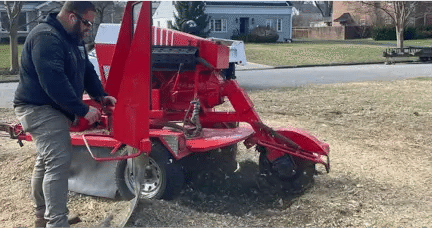
Challengers Tree Service helps homeowners in Grove City, Ohio, manage overhanging branches safely and professionally. Our team can assess branches crossing property lines and determine the safest pruning approach. We use proper pruning techniques to remove encroaching growth without unnecessarily damaging the tree.
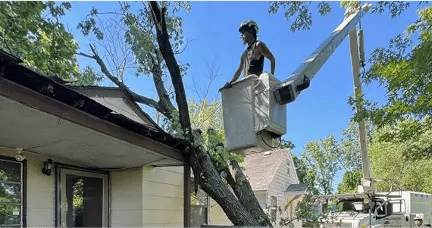
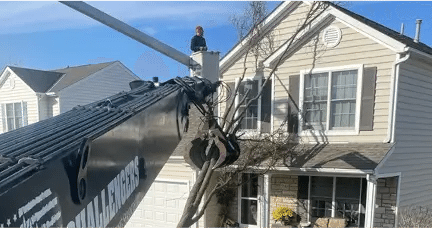
Our experienced crew can also handle larger limbs that pose risks to roofs, fences, driveways, or other structures. Professional trimming can help reduce neighbour disputes while keeping the tree healthy and properly maintained. If you’re dealing with branches extending onto your property, Challengers Tree Service can provide a practical solution tailored to the situation.
Frequently Asked Questions About Neighbor Tree Disputes in Columbus, Ohio
Do I need my neighbor’s permission to trim branches hanging over my yard?
Generally, no. Under Ohio’s common law self-help doctrine, you can trim branches and roots that cross onto your property without the tree owner’s permission, as long as you stay on your own side of the boundary and don’t damage the tree.
Can I be sued for trimming a neighbor’s overhanging branches?
You can be held liable if the trimming is done improperly and damages the tree’s health, or if you go beyond your property line or enter the neighbor’s land without permission. Trimming done correctly, within your own property, is generally protected.
What if my neighbor’s tree branches keep growing back every year?
This is common with fast-growing species and simply requires repeat trimming. If it becomes a persistent enough issue, it’s worth having a direct conversation with your neighbor about a more permanent solution, like a larger pruning or, in some cases, tree removal on their end.
Who is responsible if my neighbor’s tree falls and damages my property?
In most cases, your own homeowner’s insurance covers the damage regardless of whose tree it was, though insurers may pursue reimbursement between policies in certain circumstances, particularly if the tree’s hazardous condition was previously known and ignored.
Should I hire a professional or trim the branches myself?
For small, easily reachable branches, some homeowners handle this themselves. For anything requiring a ladder, involving larger limbs, or near a property line where precision matters, a licensed tree service reduces both safety risk and liability exposure.
Summary Checklist: Trimming a Neighbor’s Overhanging Tree in Columbus, OH
| Situation | What’s Allowed | What’s Not Allowed |
| Branches over your yard | Trim back to the property line | Trimming beyond the boundary |
| Accessing the branches | Trim from your own property | Entering the neighbor’s land without permission |
| Tree health | Careful, proper pruning technique | Damage that harms or kills the tree |
| Fallen fruit | Keep fruit that’s fallen on your side | Picking fruit still on the branch without permission |
| Hazardous tree concerns | Document and communicate with neighbor | Self-help trimming as a safety fix |
Final Advice
Ohio’s common law generally gives you the right to trim a neighbor’s overhanging branches and encroaching roots back to your property line, without needing their permission. But that right comes with real limits: stay on your side of the boundary, avoid damaging the tree, and never enter the neighbor’s property without consent. For anything beyond simple, low branches, a conversation with your neighbor and a call to a licensed tree service will usually get you a better result, and a lot less risk, than handling it alone.
Challengers Tree Service helps Columbus homeowners handle boundary-line tree trimming safely and correctly. If you’re dealing with overhanging branches from a neighboring property, reach out for a professional assessment.