A cracked tree trunk can be a silent threat lurking in your yard, often going unnoticed until it’s too late. Many homeowners assume a tree is healthy if its leaves are green and full. This assumption, however, can be dangerously misleading when a significant crack compromises the trunk’s core. Understanding the true risks of a cracked tree, even one that appears vibrant, is crucial for property safety in the Columbus, OH area.
Key Takeaways
- A cracked tree trunk is a serious structural defect, regardless of green foliage, indicating potential internal damage.
- Green leaves only mean the tree is still transporting water and nutrients; they don’t reflect the trunk’s stability.
- Cracks expose trees to pests and diseases, accelerating decay and weakening the tree from within.
- Local climate factors in Columbus, OH, like temperature swings and severe storms, are common causes of dangerous tree cracks.
- Professional assessment by a Professional arborist is essential to determine the crack’s severity and recommend appropriate, safe solutions.
- Never attempt to fix significant trunk cracks yourself; it poses extreme safety risks and can worsen the problem.
What Exactly Is a Cracked Tree Trunk?
A cracked tree trunk is a severe structural defect. According to the Columbus Tree Technical Manual, any tree with significant structural compromise within its Critical Root Zone (CRZ), defined as a 1.5-foot radius for every 1 inch of trunk diameter, poses a high risk of failure and must be evaluated by a certified arborist. They’re often indicators of internal stress or damage that can lead to catastrophic failure.
The Tree’s Core Support System
Tree trunks are the primary support structure for the entire tree, responsible for nutrient and water transport and mechanical stability. When a crack forms, this vital support system is compromised. Think of it like a foundational crack in a house; it weakens the entire structure, even if the walls still look painted and new.
Different Types of Trunk Cracks
Cracks vary significantly in type and severity, each presenting unique risks. Knowing the difference helps in understanding the danger:
- Vertical Cracks: These run lengthwise up and down the trunk. They can be surface-level (often called frost cracks or sunscald) or deep splits that extend into the wood, indicating significant internal stress.
- Horizontal Cracks: Less common but extremely dangerous, these run across the trunk. They often signify imminent failure, as the tree’s ability to resist bending and breaking is severely compromised.
- Radial Cracks: These cracks radiate from the centre of the trunk outwards, often hidden within the wood until exposed. They’re typically caused by internal wood stresses or decay.
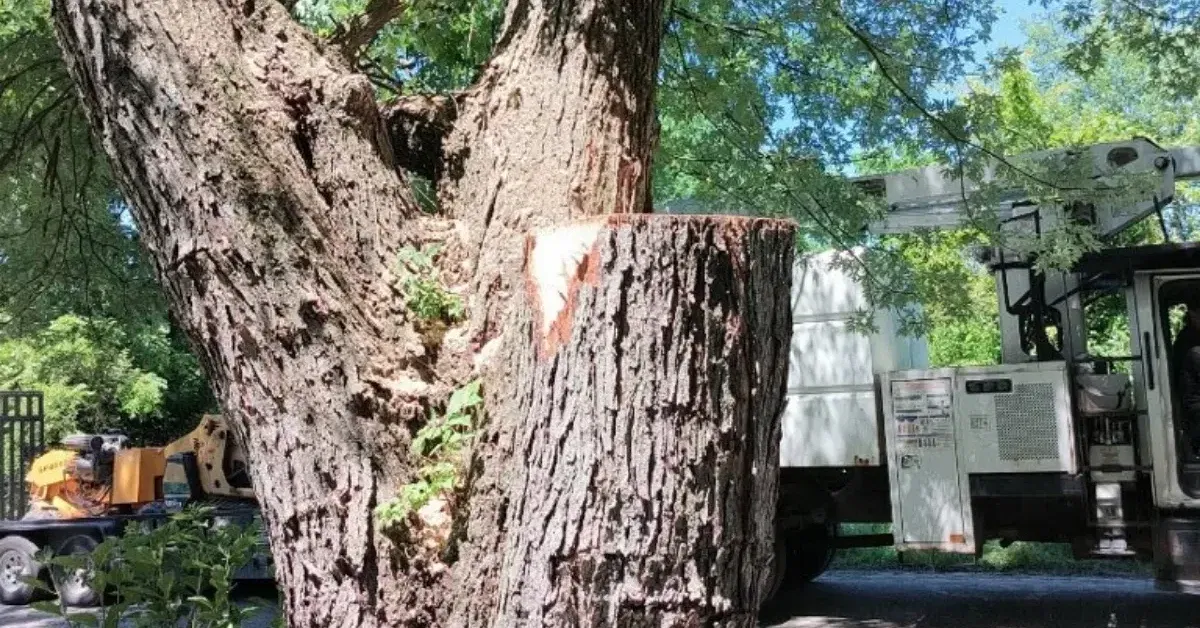
- Shear Cracks: Occur when a tree splits apart due to opposing forces, often seen in multi-stemmed trees or where a large branch meets the trunk with a weak attachment. These are highly unstable.
Why a Green Tree with a Crack is Still Dangerous
A green canopy doesn’t guarantee a tree’s safety; a cracked trunk signifies a severe internal weakness that can lead to sudden, unpredictable failure. The leaves are simply a sign of ongoing photosynthesis, not a reflection of structural stability. This dichotomy is critical to understand for anyone with trees on their property.
Structural Integrity Compromise
The most significant danger of a cracked trunk is the direct compromise to the tree’s structural integrity. The tree’s ability to stand upright and withstand forces like wind and gravity is severely reduced. A deep crack effectively severs the strong, continuous wood fibers that provide support, making the tree inherently unstable. This can lead to:
- Weakened Load-Bearing Capacity: The trunk can no longer support the weight of the canopy, especially when wet from rain or burdened by snow and ice.
- Increased Risk of Branch Failure: Cracks can extend into major scaffold limbs, causing large branches to break off without warning.
- Total Tree Failure: The entire tree could split apart or fall, causing extensive damage to homes, vehicles, or even serious injury.
Pest and Disease Vulnerability
Cracks are open wounds for a tree, creating direct entry points for a host of damaging organisms. Once the protective bark layer is breached, the inner wood is exposed to the elements and biological threats. This exposure can accelerate the tree’s decline.
- Fungal Pathogens: Spores from fungi and decay organisms can enter through cracks, leading to internal rot that further weakens the wood.
- Insect Infestations: Pests like borers, termites, or carpenter ants are attracted to exposed or decaying wood. They can tunnel through the tree, hollowing it out and compromising its strength.
- Water Infiltration: Rain and moisture can seep deep into the crack, promoting decay and potentially freezing and expanding in winter, which can widen the crack further.
Hidden Internal Decay
Often, the visible crack is just the tip of the iceberg. Internal decay can spread unseen within the trunk, making a seemingly ‘green’ tree a ticking time bomb. An arborist uses specialized tools to detect this hidden damage.
- Advanced Wood Rot: Decay organisms can consume the wood from the inside out, creating hollows that severely reduce the trunk’s strength.
- Cavities: Large internal cavities can form, making the tree incredibly fragile, especially at the point of the crack.
- Root System Impact: In some cases, decay can extend down into the root flare and main structural roots, further destabilizing the entire tree.
Risk of Sudden Failure
The most alarming aspect is the unpredictability. A compromised tree can fail at any moment, not just during severe weather. This makes a cracked tree a constant liability.
- Wind Gusts: Even moderate winds can exert enough force to cause a severely cracked tree to split or fall.
- Weight of Precipitation: Heavy rain, snow, or ice accumulation can add significant weight, exceeding the weakened trunk’s capacity.
- No Warning: Unlike a tree slowly leaning, a tree with a deep trunk crack can fail suddenly, without prior obvious external signs of distress beyond the crack itself.
Common Causes of Tree Trunk Cracks in Columbus, OH
Understanding the common culprits behind tree trunk cracks helps in both prevention and early detection, especially given the diverse climate in the Columbus, OH area. Many factors contribute to these structural failures.
Temperature Extremes (Frost Cracks, Sunscald)
Ohio’s distinct four seasons, particularly the rapid temperature shifts, are a primary cause of specific types of tree cracks. These environmental stresses are very common in the local area.
- Frost Cracks: These vertical splits typically occur in winter when temperatures plummet rapidly. The outer bark and wood contract faster than the inner wood, causing tension that results in a crack. Fluctuating winter temperatures in Central Ohio often lead to frost cracks. To prevent further decline, the Ohio Department of Agriculture strictly warns against pruning or wounding oak trees from April through July, as fresh cracks and cuts attract the beetles that spread fatal Oak Wilt disease.
- Sunscald: While not always a crack, severe sunscald can weaken bark and wood, making it more susceptible to cracking. It occurs when dormant tree bark is heated by winter sun and then rapidly frozen, damaging the cambium layer beneath.
Storm Damage (Wind, Ice, Snow)
Severe weather events are a leading cause of immediate and dramatic tree damage, often resulting in significant cracks or splits.
- High Winds: Strong winds from thunderstorms, non-convective high winds, or tornadoes (common in Ohio) can exert immense force on a tree, causing trunks to twist, split, or shear.
- Ice Storms: The weight of ice accumulation on branches can be tremendous, leading to limb breakage that transfers stress to the trunk, causing splits.
- Heavy Snow: Similar to ice, heavy, wet snow can weigh down branches, stressing the trunk and potentially causing it to crack, especially in trees already weakened.
Poor Pruning Practices
Incorrect pruning techniques can unintentionally create weak points that develop into cracks over time. This is a common, preventable cause.
- Flush Cuts: Removing branches too close to the trunk damages the branch collar, hindering proper wound closure and creating entry points for decay.
- Topping: Severely cutting back major limbs encourages weak, water sprout growth that can easily split from the main trunk.
- Leaving Stubs: Stubs left after pruning don’t heal properly and become prime sites for decay, which can spread into the trunk and cause cracks.
Disease and Pests
Underlying biological issues can significantly weaken a tree’s wood, making it prone to cracking under normal stress. These issues are often unseen until the crack appears.
- Heart Rot Fungi: Various fungi cause decay within the heartwood, hollowing out the trunk and making it structurally unsound.
- Cankers: Localized dead areas on the bark, often caused by fungi or bacteria, can weaken the trunk and lead to cracking.
- Wood-Boring Insects: Pests like emerald ash borer or longhorn beetles tunnel through the wood, compromising its integrity and making it susceptible to breaking or splitting.
How to Assess the Danger of a Cracked Tree Trunk (Initial Steps)
While a professional arborist is always the final authority, homeowners can perform a safe initial assessment to understand the severity of a cracked tree trunk. This helps you communicate effectively with experts and understand the urgency of the situation.
Visual Inspection Checklist
Before calling a professional, safely observe your tree from a distance. Never approach a tree you suspect is unstable, especially during windy conditions.
- Crack Location: Is it high on the trunk, at the base, or where a large limb meets the trunk? Cracks at the base or major unions are often more critical.
- Crack Depth: Does it appear to be just surface bark, or can you see into the wood? Deeper cracks are more dangerous.
- Crack Length: How far up or around the trunk does the crack extend? Longer cracks indicate more extensive damage.
- Exposed Wood: Is the inner wood exposed? If so, is it discolored, soft, or showing signs of decay (e.g., fungi, insect frass)?
- Tree Lean: Is the tree leaning noticeably to one side, especially away from the crack?
- Other Damage: Are there other signs of stress, like dead branches, sparse foliage, or cankers on the bark away from the crack?
Warning Signs That Demand Immediate Professional Attention
Certain observations immediately signal a high-risk situation that requires an arborist’s urgent attention. If you see any of these, maintain a safe distance and contact a professional immediately.
- Expanding Crack: The crack appears to be widening or getting longer over time.
- Horizontal Cracks: Any crack running horizontally across the trunk is a critical sign of imminent failure.
- Splitting Trunk: The trunk is visibly splitting apart, especially at a ‘V’ shaped union.
- Decay within the Crack: You can see soft, crumbly wood, fungal growth, or insect activity deep inside the crack.
- Tree Leaning Significantly: A noticeable and increasing lean, especially if accompanied by a crack.
- Safety is the priority for trees near utilities: According to AEP Ohio’s Tree Trimming Safety Guidelines, property owners should never attempt to cut back or remove trees within 10 feet of power lines; instead, report the hazard immediately to AEP Ohio at 1-800-672-2231.
Professional Solutions for Cracked Tree Trunks
Addressing a cracked tree trunk requires expertise and specialized equipment. Depending on the severity and type of crack, professional arborists employ various strategies to mitigate risk and, where possible, preserve the tree.
Tree Bracing and Cabling
For trees with minor splits or weak unions, bracing and cabling can provide supplemental support, extending the tree’s life and reducing failure risk. This isn’t a permanent fix but a management strategy.
- Cabling: Involves installing high-strength steel cables between major limbs to limit their movement and reduce stress on weak points.
- Bracing: Uses threaded rods inserted through the trunk or limbs to provide more rigid support, often used for splits that are actively separating.
- Dynamic Cabling: Newer systems use non-invasive, flexible ropes that allow for natural tree movement while providing support, suitable for smaller cracks.
Strategic Pruning
Careful, strategic pruning can sometimes alleviate stress on a cracked trunk. This is a delicate process that must be performed by a Professional arborist.
- Crown Reduction: Reducing the overall size of the tree’s canopy can lessen the wind sail effect and reduce the weight burden on a weakened trunk.
- Weight Reduction: Removing specific heavy limbs that are contributing to the stress on the cracked area.
- Hazard Reduction Pruning: Eliminating dead, diseased, or weakly attached branches that could fall and cause further damage or stress.
Tree Removal (When It’s Necessary)
When a crack severely compromises the tree’s structural integrity, or if decay is too advanced, removal becomes the safest and only viable option. This is especially true for large trees near structures or high-traffic areas.
- Safety First: Removal eliminates the immediate danger of a falling tree or limbs.
- Property Protection: Prevents potential damage to homes, vehicles, and other assets.
- Disease Control: Removes trees that are beyond saving and could spread disease to other healthy trees on your property.
- Expert Execution: Professional tree removal ensures the job is done safely and efficiently, especially for complex or hazardous trees.
Cost of Addressing a Cracked Tree Trunk (Columbus, OH Focus)
The cost of addressing a cracked tree trunk varies significantly based on several factors. In the Columbus, OH area, you can expect a range of prices depending on the complexity of the work.
Factors Influencing Cost
Several elements influence the final price tag for tree services related to cracked trunks. Understanding these helps you gauge potential expenses.
- Tree Size and Type: Larger trees, especially mature hardwoods, require more time, equipment, and expertise, increasing costs.
- Crack Severity and Location: Minor cracks requiring simple cabling are less expensive than deep splits necessitating complex bracing or removal.
- Accessibility: Trees in confined spaces, near structures, or on steep slopes are more challenging and costly to service.
- Required Equipment: Specialized equipment, like cranes for large removals or advanced climbing gear, adds to the expense.
- Permits: In some Columbus, OH municipalities, permits might be required for tree removal, adding a small administrative cost.
- Emergency Services: If the cracked tree poses an immediate hazard, emergency services typically come at a higher premium.
Typical Cost Ranges for Services
While these are estimates, they provide a general idea for homeowners in the greater Columbus area. Always get a detailed quote from a Professional arborist.
| Service Type | Description |
| Tree Cabling / Bracing (Minor) | Provides supplemental structural support for smaller trees with minor splits. |
| Tree Cabling / Bracing (Complex) | Used for larger trees with significant splits or multiple structural weaknesses. |
| Strategic Pruning (Hazard Reduction) | Reduces weight and stress on compromised trunks based on tree size and condition. |
| Tree Removal (Small Tree) | Trees under 30 feet with relatively easy access. |
| Tree Removal (Medium Tree) | Trees between 30 and 60 feet with moderate complexity. |
| Tree Removal (Large / Hazardous Tree) | Trees over 60 feet, difficult access, or high-risk locations near structures. |
DIY vs. Professional Tree Service for Cracked Trunks
When faced with a cracked tree trunk, homeowners often wonder if it’s a task they can handle themselves. The truth is, tree work, especially involving compromised trees, is inherently dangerous and best left to professionals.
| Aspect | DIY Approach | Professional Tree Service |
| Safety Risk | Extremely high risk of falls, equipment injury, falling limbs, and property damage. | Minimal client risk. Trained crews use proper safety gear and proven techniques. |
| Expertise & Assessment | Limited knowledge of tree biology, structural cracks, and decay progression. | Accurate diagnosis of structural issues with clear, appropriate solutions. |
| Equipment | Basic tools that may be unsafe or insufficient for large or hazardous trees. | Advanced equipment, including lifts, cranes, rigging systems, and safety gear. |
| Effectiveness | Improper fixes can worsen cracks, accelerate decay, or create new hazards. | Professional solutions such as cabling, bracing, or safe removal for lasting results. |
| Cost | Lower upfront cost but high potential for expensive damage or injury. | Higher upfront investment that prevents costly future problems. |
| Insurance / Liability | Homeowner assumes full liability for accidents or property damage. | Fully insured service protecting both crew and property. |
Common Mistakes Homeowners Make with Cracked Trees
Even with good intentions, homeowners can make critical errors when dealing with a cracked tree, often worsening the situation or creating new hazards.
- Ignoring the Problem: The most dangerous mistake is assuming a green tree with a crack isn’t an immediate threat. Cracks rarely improve on their own and typically worsen over time.
- Delaying Professional Assessment: Waiting too long to call an arborist can turn a manageable issue (like bracing) into an unavoidable and more expensive removal.
- Attempting DIY Repairs: Using ropes, chains, or even bolts without professional knowledge can cause more harm, girdle the tree, or lead to sudden failure.
- Improper Pruning: Attempting to prune heavy limbs near a crack without expertise can shift weight unevenly, causing the tree to split further or fall.
- Hiring Uninsured Contractors: Opting for cheaper, uninsured services leaves you fully liable for accidents, injuries, or property damage during tree work.
- Planting Incompatible Trees: In some cases, poor species selection for the local soil and climate can lead to stress and cracking over the tree’s lifetime.
Frequently Asked Questions
Can a tree with a cracked trunk still be dangerous if it has green leaves?
Yes, absolutely. A tree can maintain green leaves for a significant time even with severe internal structural damage. The crack indicates a compromise in the trunk’s integrity, making it vulnerable to sudden failure, especially during storms or high winds, regardless of its outward appearance.
How much does it cost to fix a cracked tree trunk?
The cost varies widely based on the crack’s severity, tree size, location, and the chosen solution (bracing, removal). Minor bracing might start at $300-$800, while a complex removal could range from $800 to over $2,000 in the Columbus, OH area. A professional assessment provides an accurate quote.
Can I fix a cracked tree trunk myself?
It’s rarely a good idea to attempt DIY repair on a significant tree trunk crack. Incorrect methods like improper cabling or attempting removal without expertise can worsen the damage, create serious safety hazards, and potentially lead to property damage or injury. Always consult a Professional arborist.
What causes tree trunks to crack?
Common causes include temperature fluctuations (leading to frost cracks or sunscald), storm damage (wind, ice, snow), poor pruning that creates weak points, and underlying diseases or pests that weaken the wood. In Columbus, OH, temperature swings are a frequent culprit.
Will a tree trunk crack heal on its own?
While minor surface cracks might heal, deeper or expanding cracks indicate significant structural failure that won’t resolve on its own. These types of cracks require professional intervention, such as bracing, cabling, or removal, to prevent further deterioration and potential tree failure.
What are the signs of a dangerous tree trunk crack?
Look for visible splits, vertical or horizontal separations in the bark or wood, areas where the bark is peeling back, or signs of decay around the crack. Also, observe if the tree is leaning, dropping large limbs, or showing fungal growth near the crack.
Protect Your Columbus Property From Cracked Tree Trunk Risks
A cracked tree trunk is a serious structural issue that demands immediate attention, regardless of how green the canopy might appear. Ignoring these signs puts your property and safety at risk. Don’t wait for a small crack to become a catastrophic failure. If you’ve identified a cracked tree on your property in the Columbus, OH area, it’s time to get an expert opinion. Contact us at Challengers Tree Service today for a professional assessment and to discuss the safest, most effective solutions for your trees.