Key Takeaways:
- Immediate Evacuation: Structural integrity is compromised the moment a tree strikes a roof; exit the premises immediately.
- Electrical Awareness: Treat all fallen trees as energized if power lines are nearby until utilities confirm safety.
- Document for Claims: Take ground-level photos before removal to ensure your insurance claim is fully supported.
- Crane Specialization: Lifting a tree off a house requires vertical lift technology to prevent secondary roof scraping.
- 24/7 Priority: Emergency services are available around the clock, bypassing the standard booking window for routine jobs.
For homeowners in Columbus, Ohio, the sudden, bone-shaking impact of a tree hitting a roof is a nightmare scenario. Central Ohio’s weather can be unpredictable, ranging from heavy ice storms that weigh down limbs to summer derechos with straight-line winds that uproot even the most established oaks. When a tree fails and lands on a home, it isn’t just a landscaping nuisance; it is a complex structural emergency that requires immediate, professional intervention.
The weight of a mature tree can exceed several tons. When that weight is suddenly transferred to a residential roof, it stresses the entire frame of the building, from the rafters down to the foundation. This guide serves as a comprehensive resource for navigating this crisis, covering everything from life-safety protocols and the physics of tree removal to the nuances of insurance claims in the Columbus area.
The Immediate Crisis: Safety Protocols
The moment a tree hits your house, your adrenaline will spike. However, the first few minutes are the most critical for life safety. You must act with a safety-first mindset, assuming the structural stability of the home is gone until a professional proves otherwise.
1. Evacuate the Premises Immediately
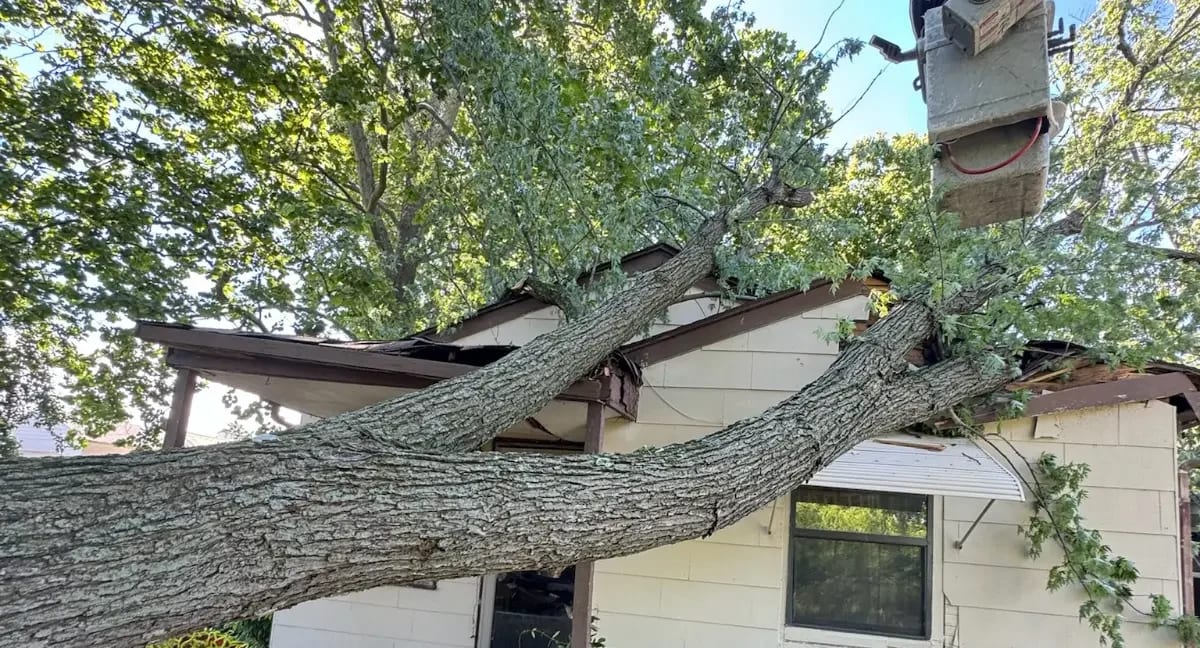
If a large tree or a heavy limb has struck the roof, gather your family and pets and exit the house. Do not stop to collect valuables, laptops, or jewelry. A house under the weight of several tons of timber can settle, shift, or collapse without any auditory warning. Standard residential rafters are designed for a live load of snow or wind, not the concentrated static load of a massive, water-logged trunk. Even if the tree appears to be resting lightly, the underlying structural members may be fractured.
2. Check for Fire and Electrical Hazards
Trees almost always bring down secondary power lines or service drops when they fall. In many Columbus neighborhoods, these lines are overhead and easily snagged. If you see sparks, smell smoke, or hear a persistent buzzing sound, do not touch any metal objects, fences, or standing water near the house. If it is safe to access your main electrical panel from the outside, shut off the power to prevent an interior fire caused by punctured wiring. Otherwise, wait for the utility company (like AEP Ohio) to arrive and de-energize the area.
3. Do Not Re-enter for Quick Tasks
Many homeowners make the mistake of running back inside to grab a pet or a wallet. Structural failure can be delayed; as the wood of the tree absorbs rainwater or as the house settles under the new weight, a collapse can happen minutes or hours after the initial impact. Stay outside until an emergency responder confirms the area is stable.
Why DIY Is Not an Option: The Physics of Reactive Tension
It can be incredibly tempting for a handy homeowner to grab a chainsaw and start clearing smaller branches to lighten the load on the roof. This is a potentially fatal mistake. A tree resting on a structure is under incredible reactive tension.
The Springboard Effect
When a tree is vertical, gravity pulls it straight down. When it is horizontal and wedged against a roof or another tree, it becomes a giant, loaded spring. Every branch you cut can change the center of gravity or release tension in a way that causes the tree to roll, slide, or kick back with thousands of pounds of force. Chainsaw kickback is a leading cause of injury in storm cleanup, but when combined with a shifting 5-ton trunk, the results are catastrophic.
Structural Fragility
Climbing a roof that has been structurally compromised is an invitation to a collapse. The added weight of a human being on a fractured rafter can be the last straw that triggers a cave-in. Professional crews use specialized rigging, cranes, and bucket trucks to stabilize the tree before a single cut is made. They understand weighted physics, knowing which branch is under compression and which is under tension.
Navigating the Insurance Process in Columbus
Most homeowners’ insurance policies in Columbus cover tree removal if the tree has landed on a covered structure, such as your primary residence, a detached garage, or a fence.
Documentation is Your Best Friend
Before the tree service begins the removal, take clear photos and videos from the ground. Capture the entry point on the roof, any cracked windows, and any interior damage (if visible from a doorway). This evidence is vital for your adjuster to determine the extent of the impact. Avoid climbing onto the roof to get better shots; the ground-level view is usually sufficient for initial claims.
Mitigating Further Damage
Insurance companies expect you to take reasonable steps to prevent additional loss. This typically means having the tree removed promptly. If you leave the tree there for three days and it rains, the insurance company may deny the claim for the resulting mold and water damage because you didn’t act quickly to mitigate the loss. This is why 24/7 emergency response is not just a luxury; it is a requirement for many insurance claims.
The Technical Challenge of Tree-on-House Extractions
Removing a tree from a lawn is straightforward, but removing one from a roof is a surgical operation. If a tree is simply dragged off a house, the friction and weight will destroy the shingles, decking, and gutters far more than the initial impact did. This is often called secondary damage, and it is almost always avoidable with the right equipment.
The Crane Advantage
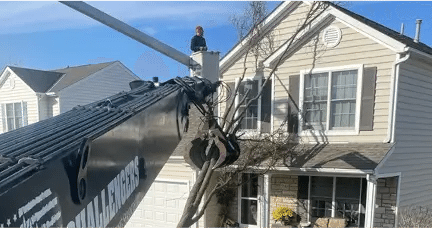
Emergency crews in Columbus utilize a lift-off method using high-capacity cranes. This process involves:
- Staging the Crane: Ensuring the stabilizers (outriggers) are set on firm ground or specialized pads so they don’t crush your driveway or underground sewer lines.
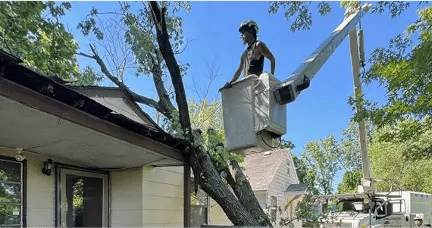
- Rigging the Trunk: An arborist (often in a bucket truck) attaches high-tensile slings to multiple points on the tree to balance its center of gravity.
- Vertical Lift: The crane operator slowly lifts the tree vertically, completely clearing the roofline before the tree is moved horizontally.
- Controlled Processing: The tree is lowered into a drop zone in the yard or street, where ground crews use chainsaws to break it down for debris hauling.
Identifying Potential Hazards Before the Next Storm
While you can’t stop a tornado or an ice storm, you can identify which trees on your Columbus property are high-risk. Prevention is always cheaper and safer than emergency removal.
Root Plate Stability
Look at the ground around the base of your large trees. Is the soil heaving or lifting on one side? This is a sign that the root plate is failing. Similarly, if you see standing water at the base of a tree for long periods, the roots may be rotting, losing their anchor strength.
Trunk Integrity
Check for deep cracks or included bark (V-shaped unions where two trunks meet). These are structural weak points. Also, look for fungal growth (mushrooms or conks) growing directly out of the bark. This is often a sign of internal decay, meaning the tree is hollow or soft inside, even if the leaves look green.
When a storm leaves a tree resting on your roof, you need a team that reacts with the same urgency as the emergency itself. Challengers Tree Service provides dedicated 24/7 emergency tree response throughout Columbus, Grove City, and all of Central Ohio. While our routine jobs are often booked three weeks out, we maintain a rapid-response team available right now to handle tree removal, tree trimming & pruning, 24/7 emergency tree service, stump removal & grinding, shrub removal & trimming, debris hauling/removal, and lot & land clearing. We bring decades of experience and advanced equipment, including specialized rigging and heavy-lift cranes, to every site.
Frequently Asked Questions (FAQs) by Homeowners in Columbus, OH
1. Is a tree on my roof always an emergency in Columbus, OH?
Yes. Even if the roof isn’t caved in, the static weight causes structural fatigue, and any puncture leads to water damage.
2. Will the tree service company tarp my roof?
Professional emergency services like Challengers Tree Service can provide basic tarping to protect your interior until a roofer arrives.
3. Does insurance cover the cost of a crane in Columbus, OH?
If a crane is a mechanical necessity for safe removal from a covered structure, insurance almost always covers it.
4. Can you remove a tree if it’s still touching power lines in Columbus, OH?
No. We must coordinate with the utility company to de-energize the lines before we can safely touch the tree.
5. What if the tree fell in the yard but didn’t hit anything in Columbus, OH?
This is usually a non-emergency. It should be cleared to prevent pest infestations, but it doesn’t require immediate 24/7 dispatch.
6. Does Challenger’s Tree Service offer stump removal in Columbus, OH?
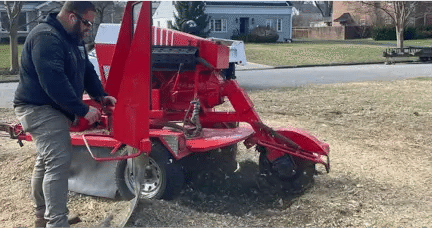
Yes. Once the emergency is over, we can perform stump grinding to allow you to replant or reseed the area.
7. How do I know if my tree is in the Right-of-Way in Columbus, OH?
In Columbus, the area between the sidewalk and the street is usually the public ROW. The city may be responsible for these trees.
8. Can I keep the wood for firewood?
Absolutely. If you want us to leave the logs for your fireplace, just let our crew know during the estimate.
Summary Checklist: Emergency Tree on Roof
| Condition | Risk Level | Recommended Action |
|---|---|---|
| Tree resting on the roof | High | Evacuate the affected area and arrange immediate emergency professional removal |
| Tree puncturing the ceiling or structural interior | Critical | Evacuate immediately, avoid compromised areas, and contact emergency response professionals |
| Tree tangled in power lines | Life-Threatening | Stay well away from the area and contact the utility provider immediately |
| Large hanging limb over the roof | Moderate | Arrange urgent professional pruning to reduce the immediate failure risk |
| Debris blocking entry or exit access | Moderate | Arrange prompt debris removal to restore safe property access |
Final Advice
When a tree makes impact with your roof, the most critical decision you can make is to prioritize immediate life safety over property recovery. Evacuate all inhabitants and pets immediately, as structural failures can occur hours after the initial strike as the building settles under the immense weight of the timber. You should never attempt to cut branches yourself; the reactive tension in a fallen tree can cause it to shift or kick back with lethal force. Instead, secure your property by contacting a 24/7 emergency tree service that utilizes vertical-lift cranes to eliminate the risk of secondary roof damage.
Documenting the scene with photos from the ground will assist your insurance claim, but remember that rapid removal is required to mitigate further water damage to your home’s interior. Consistent preventative maintenance, such as professional arborist inspections for root rot and trunk cracks, remains your best defense against future storm-related failures. By acting decisively and relying on specialized heavy equipment, you can stabilize your home and move quickly toward a safe restoration.