
Key Takeaways
- Ownership Identification: Determine if the tree is on the public “right-of-way” before reporting to the city.
- The 311 System: Utilize the Columbus 311 Service Center for non-emergency public tree concerns.
- Emergency Scenarios: Call 911 or the Department of Public Service for trees blocking roads or involving power lines.
- Liability Boundaries: The city maintains trees in the “tree lawn,” but private trees are the homeowner’s responsibility.
- Professional Advocacy: If a city tree threatens your private property, an arborist report can speed up the response.
Columbus is celebrated for its lush urban canopy, but maintaining thousands of trees along streets, in public parks, and within the city’s right-of-way is a massive undertaking. For residents in neighborhoods like Clintonville, Berwick, or the Short North, a majestic street tree is a point of pride-until a large limb begins to rot, or a storm leaves it leaning toward your house.
Knowing how to navigate the City of Columbus Urban Forestry Department is essential for community safety. When a tree on public property becomes a hazard, the responsibility for its maintenance falls on the municipality, but the “eyes on the ground” are often the residents themselves. This guide will walk you through identifying, reporting, and following up on hazardous trees on public land.
Step 1: Determining Tree Ownership
Before filing a report, you must confirm that the tree is actually the city’s responsibility. Columbus generally maintains trees located within the Public Right-of-Way (ROW).
- The Tree Lawn: This is the strip of land between the sidewalk and the street. Trees planted here are almost always city-owned.
- Park Trees: Any tree within a designated Columbus city park falls under the jurisdiction of the Recreation and Parks Department.
- The Grey Area: In some older neighborhoods, the “right-of-way” may extend several feet behind the sidewalk. If you are unsure, you can check the Columbus Auditor’s GIS map or simply file a report for the city to verify.
If the tree is on your private property (inside your fence line), it is your responsibility. If you notice a hazard on your own land, contact Challengers Tree Service for a private assessment.
Step 2: Identifying the Hazard Level
Not every dead branch requires an emergency response. The City of Columbus prioritizes reports based on the severity of the threat:
- Life-Threatening Emergencies: A tree that has fallen across a major roadway, is leaning significantly after a storm, or is entangled with power lines.
- High-Risk Hazards: Large dead hanging limbs (widow-makers) over a sidewalk or street, or a tree with a split trunk.
- Routine Maintenance: Low-hanging branches blocking signs or dead trees that are still standing vertically with no immediate target.
Step 3: How to File a Report
The City of Columbus utilizes a centralized system called the 311 Service Center. There are three ways to submit your request:
1. The 311 Mobile App
The most efficient way to report a hazard is through the “MyColumbus” app. This allows you to upload photos of the tree and use your phone’s GPS to pin the exact location. Photos are crucial because they allow the Urban Forestry inspectors to triage the risk before they even arrive.
2. The Online Portal
Visit the Columbus 311 Website. You can select “Forestry” from the request types. Be prepared to provide:
- The nearest street address.
- A description of the hazard (e.g., “Large split in main trunk,” “Mushroom growth at base”).
- The location of the tree (e.g., “In front of the house,” “In the alleyway”).
3. Calling 311
If you prefer to speak to an operator, call 311 (or 614-645-3111). Note that during peak storm seasons, wait times can be significant. For immediate emergencies after hours (like a tree blocking a street), call the Columbus Police non-emergency line or the Department of Public Service.
Step 4: What Happens After the Report?
Once a ticket is created, it is assigned to an Urban Forestry Inspector. They will visit the site to perform a Level 1 or Level 2 arborist assessment.
- If the tree is hazardous: The city will schedule a crew or a contracted vendor to remove or prune the tree. Depending on the backlog, this can take anywhere from 24 hours to several months.
- If the tree is deemed “stable,” The city may place it on a long-term pruning cycle. You will receive an update on your 311 ticket stating the case is closed or scheduled.
The Intersection of Public and Private Safety
Sometimes, a city-owned tree poses a direct threat to your private residence. If you feel the city’s assessment has underestimated the risk to your roof or driveway, a second opinion can be powerful. Having a certified arborist provide a private risk assessment can sometimes help you advocate for a faster response from the city by providing professional documentation of the hazard.
Keep Your Property Safe with Challengers Tree Service
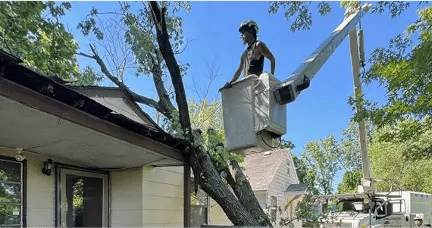
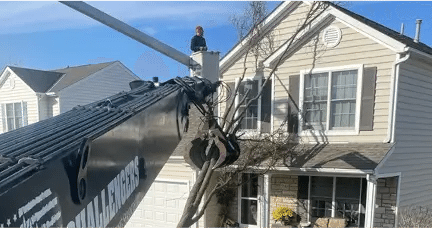
While the city manages the streets, your home’s safety starts in your own backyard. At Challengers Tree Service, we specialize in identifying “borderline” hazards-trees that may be on the edge of public and private property. Our expert team provides comprehensive trimming, pruning, hazardous removals, and 24/7 emergency response throughout the Columbus area, including Grove City, Hilliard, and Westerville. We ensure your private canopy is as safe as the public one.
Frequently Asked Questions
1. Will the city remove a tree on my property if it’s leaning toward the street?
No. If the trunk of the tree is located on your private property, you are responsible for its maintenance and any damage it causes to the street or sidewalk.
2. Can I prune a city-owned tree myself?
No. It is actually illegal to prune or remove a city-owned tree in Columbus without a permit. Doing so could result in fines. Always use the 311 system.
3. Does the city grind the stump after removing a street tree?
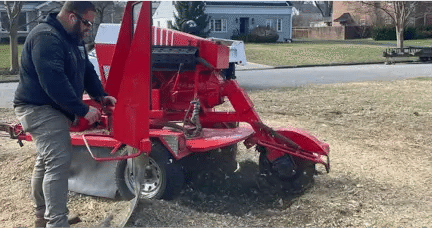
Yes, but usually not on the same day. Stump grinding is typically handled by a separate crew and may take several weeks after the initial tree removal.
4. How do I know if a tree in the alley is mine or the cities?
Alleyways are tricky. Generally, the city maintains a clear path for utility and trash trucks. If the tree is within the utility easement, it may be the city’s or the utility company’s responsibility.
5. What if a city tree falls on my car?
You should file a claim with your auto insurance provider and report the incident to the City of Columbus’s City Attorney’s office to see if you are eligible for reimbursement.
6. Do 311 handle trees that touch power lines?
No. If a tree is touching power lines, you must contact AEP Ohio first. The city will not send a crew until the lines are cleared and de-energized.
7. How long does the city take to respond to a 311 request?
For non-emergencies, inspections usually happen within 7-14 business days. Actual work may take longer depending on the city’s budget and priority list.
8. Can I request a new tree be planted in my tree lawn?
Yes! Columbus has a “Street Tree Planting” program. You can request a new tree through the 311 system once a hazard has been removed.
Summary Checklist: Reporting Public Tree Hazards
| Condition | Risk Level | Recommended Action |
|---|---|---|
| Blocking a major roadway | Critical | Contact emergency services or the appropriate public works authority immediately to address the hazard |
| Touching or being entangled with power lines | Critical | Stay away from the area and report the hazard directly to the utility provider immediately |
| Hanging a limb over a sidewalk or public path | High | Report the hazard promptly with location details and photos if available for faster response |
| Dead tree in public right-of-way or tree lawn | Moderate | Submit a municipal inspection request for evaluation and maintenance planning |
| Obstructing traffic signs or visibility | Low | Report for routine maintenance pruning to restore safe visibility |
Final Advice
Effective urban forestry is a collaborative effort between the city and its residents. If you notice a suspicious lean, a split trunk, or significant decay in a street tree, don’t assume someone else has reported it. Insightful property owners know that early reporting prevents emergency removals. By documenting the hazard clearly through the 311 system, you create the necessary paper trail to ensure city accountability. For any concerns regarding trees on your own property, or for a professional second opinion on a city tree, contact Challengers Tree Service.