Key Takeaways
- Establish a 30-Foot Safety Zone: Never approach damaged trees or downed lines; assume all power lines are live.
- Prioritize Structural Stabilization: Evacuate any building struck by a tree until a structural engineer or professional arborist clears it.
- Document Before Disturbing: Take comprehensive photos and videos from multiple angles for insurance before any debris is moved.
- Mitigate Secondary Damage: Use professional tarping and boarding services to prevent rain or pests from entering a compromised home.
- Avoid DIY Tension Releases: Storm-damaged trees contain “stored energy”; cutting without professional rigging can cause lethal kickbacks.
How to Secure Your Property Safely After Significant Tree Damage
In the aftermath of a major Central Ohio storm, the sight of a massive silver maple resting on your roof or a century-old oak splayed across your driveway is overwhelming. Your first instinct is likely to grab a ladder, a tarp, or a chainsaw to “fix” the problem. However, the period immediately following significant tree damage is the most dangerous time for homeowners.
Securing your property isn’t just about cleaning up; it’s about stabilizing a volatile environment. Whether you are in Grove City, Hilliard, or downtown Columbus, following this professional security protocol will help you protect your family, preserve your insurance claim, and prevent further structural loss.
Phase 1: Immediate Safety and Perimeter Control
Before any physical work begins, you must address the invisible threats that often accompany fallen timber.
The 30-Foot Rule and Utility Safety
Fallen trees rarely fall alone; they often bring down power, cable, and phone lines. In the wet conditions typical of Columbus storms, the ground itself can become energized.
- Protocol: Treat every wire as a live high-voltage line. Maintain a minimum 30-foot perimeter. If a tree is touching a line, do not touch the tree, your car, or even a metal fence nearby. Call AEP Ohio immediately and wait for them to de-energize the area.
Evacuation of Impacted Structures
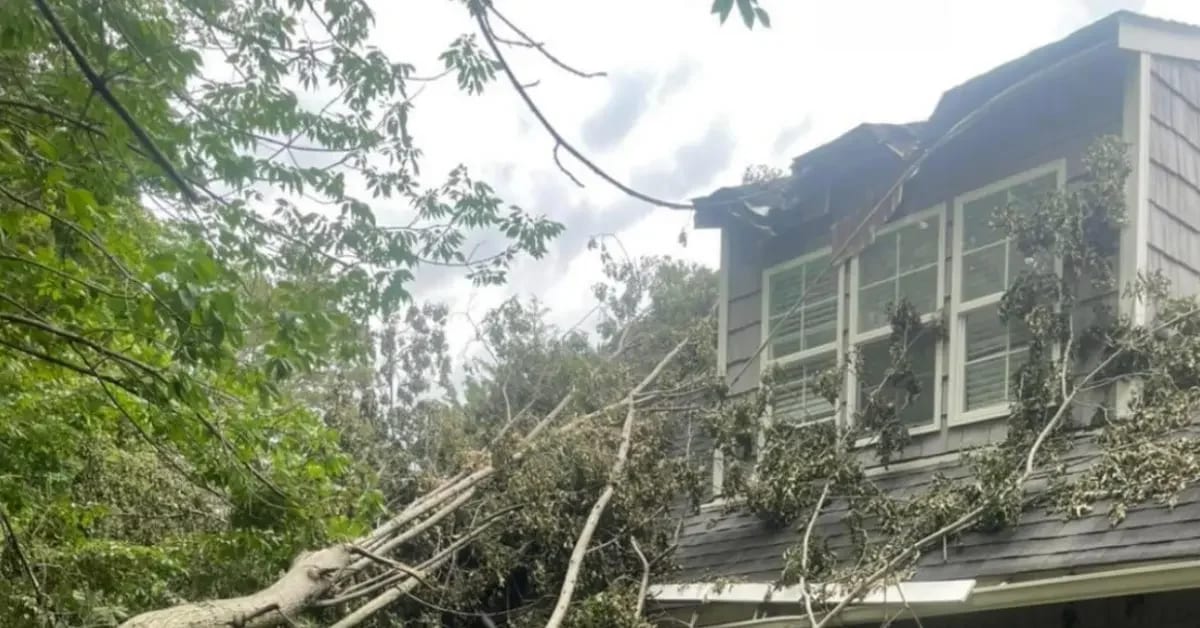
If a tree has punctured your roof or is leaning against an exterior wall, the structural integrity of your home is compromised. The weight of a mature tree can reach several tons, and as the wood dries or shifts, that weight can redistribute, leading to a secondary collapse.
- Protocol: Move all residents and pets to a safe location. Do not enter the home to “retrieve valuables” until the tree has been stabilized or removed by a crane-assisted crew.
Phase 2: Documentation for Maximum Protection
Once the immediate physical danger is managed, your next priority is financial security. In the insurance world, the burden of proof lies with the homeowner.
Capturing the “Before” State
Insurance adjusters need to see the “cause of loss.” If you cut up the tree before they see how it fell, you may inadvertently destroy evidence that proves the fall was an “Act of God” rather than a result of negligence.
- Visual Evidence: Take wide-angle shots of the entire property and close-ups of where the tree meets the structure. If the tree is uprooted, photograph the root ball; this proves the soil failed, which is a key indicator of a storm-related event.
- Narrative Video: Record a video walkthrough (from a safe distance) explaining what happened. This provides context that static photos often miss.
Phase 3: Mitigating Secondary Damage
Most homeowners’ insurance policies contain a “Mitigation Clause.” This requires you to take reasonable steps to prevent further damage after the initial event. If a tree leaves a hole in your roof and you allow it to rain inside for three days without attempting to cover it, the insurance company may deny the resulting water damage claim.
Professional Tarping and Board-Up
Attempting to tarp a roof yourself after a storm is a leading cause of ER visits in Franklin County. Roofs are slick, and the structure under the tree may be soft.
- The Right Way: Hire a service that uses specialized equipment to “drop” tarps over the damage or use a crane to clear the debris first. Challengers Tree Service works alongside restoration teams to ensure that once the tree is lifted, the home is immediately shielded from the elements.
Temporary Fencing
If a tree has flattened your fence, your property is now open to liability. Pets can escape, and curious neighbors (or “storm chasers”) may wander into the danger zone.
- Protocol: Use temporary orange construction fencing or caution tape to clearly mark the boundaries of the hazard until permanent repairs can be made.
Phase 4: Navigating the Removal Process
The final step in securing your property is the safe extraction of the debris. This is a highly technical process involving physics, weight distribution, and heavy machinery.
Why DIY is Not an Option
Storm-damaged trees are under “tension” and “compression.” A branch bent under the weight of a trunk is like a cocked catapult. If you cut it, it can snap back with enough force to shatter bone. Professional arborists use “rigging” to take the weight of the limb before the cut is made, ensuring the wood is lowered slowly rather than dropping.
Choosing the Right Partner
In an emergency, “fly-by-night” companies often appear with a truck and a saw. To secure your property, you need a company that is fully insured and licensed in Ohio. Ask for proof of Workers’ Compensation; if an uninsured worker falls off your roof while removing a tree, you, the homeowner, could be held liable for their medical expenses.
Keep Your Property Safe with Challengers Tree Service
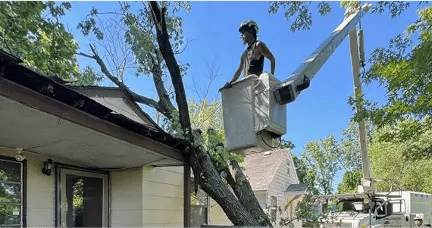
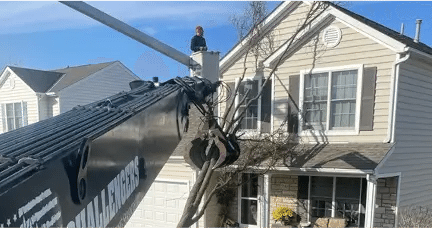
When disaster strikes, you need more than just a cleanup crew; you need a team that understands the urgency of property stabilization. Challengers Tree Service provides 24/7 emergency response throughout the Columbus area. Our expert crews use advanced crane technology and technical rigging to lift massive trees off structures without causing a single additional scratch. We help you secure your home, document the damage for your insurance, and restore safety to your landscape.
Frequently Asked Questions
1. A tree fell in my yard, but didn’t hit anything. Is it an emergency?
If it’s blocking your only exit or is leaning toward a power line, yes. If it’s just lying in the grass, it’s a standard removal. However, you should still have nearby trees checked, as the same winds may have weakened them.
2. Can I start cleaning up small branches myself?
You can clear small, loose debris that is not attached to the fallen tree or near power lines. Never pull on a branch that is pinned under a larger log.
3. Does insurance pay for the tarping service?
Yes, most policies cover “emergency mitigation,” which includes professional tarping and boarding up to prevent further water or theft damage.
4. How do I know if the ground is safe to walk on?
If a large tree has uprooted, the surrounding soil may be “undermined.” Stay back at least two times the height of the tree, as the root plate could settle or shift unexpectedly.
5. What is “stored energy” in a fallen tree?
This refers to limbs that are bent but not broken. They are under massive pressure. Professional arborists use specific “pressure release” cuts to neutralize this energy safely.
6. Will Challengers Tree Service talk to my insurance adjuster?
While we don’t file the claim for you, we provide detailed invoices, photos, and professional assessments that clearly explain the “cause of failure,” which is vital for your adjuster.
7. Should I remove the stump immediately?
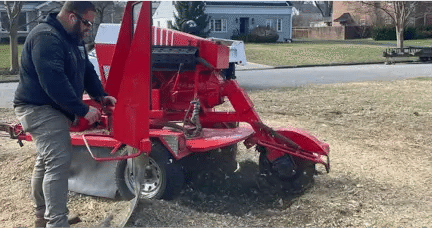
During an emergency, the priority is the trunk and limbs. Stump grinding is usually scheduled as a follow-up once the property is stabilized and the heavy equipment has cleared the site.
8. How long does it take to secure a house after a tree hits?
Our emergency teams can usually have a crew on-site within hours to assess and begin the stabilization process, though the full removal may take longer depending on the tree’s size and position.
Summary Checklist: When to Call for Removal
| Condition | Risk Level | Recommended Action |
|---|---|---|
| Tree resting on a roof or structure | Critical | Evacuate the affected area immediately and arrange emergency professional removal using appropriate equipment |
| Entangled or nearby power lines | Critical | Stay well clear of the hazard zone and contact the utility provider and emergency responders immediately |
| Split trunk or exposed heartwood | High | Secure the surrounding area and schedule an urgent professional structural assessment |
| New learning after a storm | High | Check for root movement or soil heaving and arrange immediate evaluation for failure risk |
| Hanging widow-maker limbs | Moderate to High | Keep people and pets outside the canopy danger zone until hazardous limbs are safely removed |
Final Advice
Securing your property after a tree failure is a race against two clocks: the legal clock of insurance mitigation and the physical clock of structural fatigue. Insightful property management means recognizing that a fallen tree is a dynamic hazard, not a static pile of wood. The internal tensions within a storm-damaged tree are often invisible until a cut is made, at which point the physics of thousands of pounds of wood take over.
To protect your equity and your safety, prioritize a “documentation first, intervention second” approach. By securing a professional assessment from a certified arborist, you aren’t just removing a tree; you are acquiring a legal shield for your insurance claim and a safety guarantee for your home. Don’t let a “DIY” mentality turn a property damage claim into a personal injury crisis.